THE TOBACCO INDUSTRY COVER-UP
| ACTIVE | ca. 1953 onward, coordinated from a December 1953 meeting of industry chiefs |
| EXPOSED | Leaked internal documents (1994); congressional testimony (1994); litigation discovery |
| ADJUDICATED | Master Settlement Agreement (1998); U.S. v. Philip Morris RICO verdict (2006) |
| STATUS | Proven conspiracy, the reference case for the genre |
THE CLAIM
The major tobacco companies knew for decades, from their own research, that smoking causes cancer and that nicotine is addictive, and jointly ran a campaign to deny both, manufacture scientific doubt, and market to the young.
THE THEORY, AS ITS PROPONENTS TELL IT
For four decades, the claim that cigarette manufacturers knew their product caused cancer, knew it was addictive, and were running a coordinated scientific disinformation campaign to prevent the public from believing either, was dismissed as the rhetoric of health cranks and plaintiffs' lawyers.
The theory alleged specific machinery: that the industry had formed a joint body in 1953 (the Tobacco Industry Research Committee, announced in a full-page newspaper advertisement titled "A Frank Statement to Cigarette Smokers") whose actual function was not research but the manufacture of doubt; that it funded scientists to produce contrary findings and publicised them selectively; that it suppressed its own internal results when they confirmed carcinogenicity; and that it deliberately engineered nicotine delivery to sustain addiction while testifying to Congress that nicotine was not addictive.
The documents that proved it were released by a whistleblower and then by litigation discovery, and now sit in public archives numbering in the tens of millions of pages. The most quoted line, from a 1969 Brown & Williamson internal memorandum, is the theory's epitaph: "Doubt is our product, since it is the best means of competing with the 'body of fact' that exists in the mind of the general public."
In 2006, Judge Gladys Kessler found the companies liable under the federal racketeering statute in a 1,683-page opinion holding that they had conspired to deceive the public for fifty years. Proponents argue the file's real significance is methodological rather than historical: the doubt-manufacturing playbook developed here (fund contrarian science, demand impossible certainty, reframe a settled question as an open debate) was subsequently applied, in several documented cases by the same consultants, to acid rain, the ozone layer, leaded fuel, and climate change.
WHAT IS KNOWN
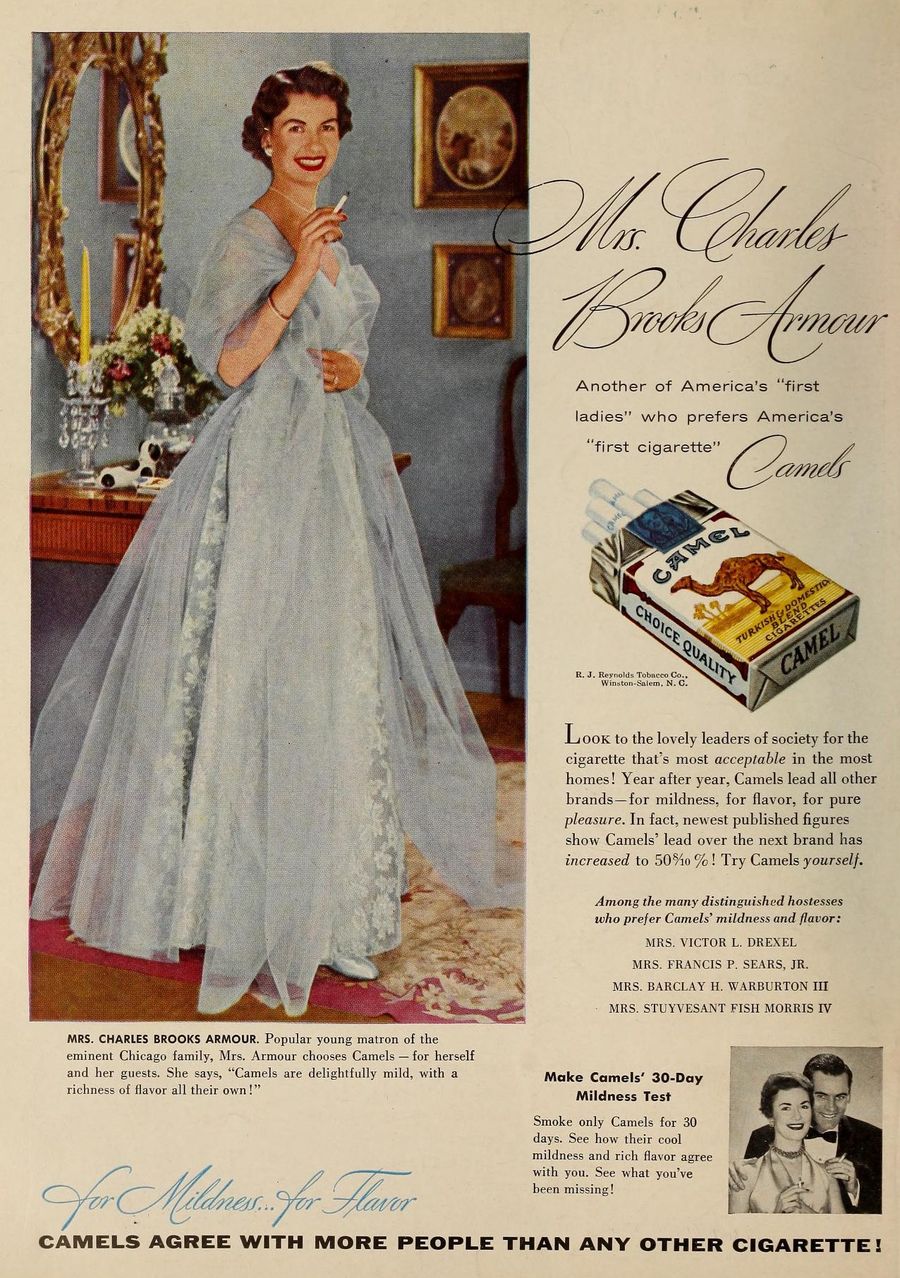
The campaign has a start date. In December 1953, the heads of the major U.S. tobacco firms met at New York's Plaza Hotel with the PR firm Hill & Knowlton to answer new research linking smoking to cancer. The result, published in over 400 newspapers in January 1954, was "A Frank Statement to Cigarette Smokers", a pledge to put public health first, paired with a jointly funded research committee whose real function, later courts found, was reassurance and doubt. Internal papers told a different story: a 1963 Brown & Williamson counsel's memo conceded the company was "in the business of selling nicotine, an addictive drug," and a 1969 B&W document supplied the era's epitaph: "Doubt is our product."
On April 14, 1994, the chief executives of the seven largest U.S. tobacco companies, press shorthand: the "seven dwarfs", testified before Rep. Henry Waxman's House subcommittee, each stating that he believed nicotine is not addictive. That same year a paralegal's cache of Brown & Williamson documents reached Professor Stanton Glantz at UCSF, becoming The Cigarette Papers and the seed of today's Truth Tobacco Industry Documents archive, millions of pages of the industry's own files.
The reckoning came in two acts. The 1998 Master Settlement Agreement with 46 states bound the majors to roughly $206 billion in payments over 25 years, marketing restrictions, and the dissolution of the industry's research and lobbying fronts. Then in 2006, in United States v. Philip Morris, federal judge Gladys Kessler found the companies had violated civil RICO, a decades-long scheme to defraud the public, in an opinion running some 1,700 pages, affirmed on appeal in 2009. Court-ordered corrective advertising finally ran in 2017–2018.
EVIDENCE FOR
- Millions of internal industry documents, produced in discovery and archived publicly, the conspirators' own paper.
- A federal racketeering verdict, upheld on appeal, expressly finding coordinated deception about addiction, disease, and marketing to youth.
- The 1994 testimony, on camera, against the backdrop of what the companies' files said privately.
EVIDENCE AGAINST (THE WILDER VERSIONS)
- The conspiracy was concealment and doubt-manufacture, not secret poisoning: the health hazards of smoking were publicly argued from the 1950s and federally declared in the 1964 Surgeon General's report. The industry lied about what it knew, not about a hidden ingredient.
- No perjury convictions followed the 1994 testimony, the CEOs testified to "belief," a lawyerly hedge that held.
ASSESSMENT
The archetype. When this bureau grades other files, "big tobacco" is the yardstick for what a proven corporate conspiracy actually looks like: decades long, run by ordinary executives through memos and PR retainers, and ultimately documented not by whistleblower lore but by subpoena. Note the mechanism, the product wasn't cigarettes, it was doubt, and the same playbook has since been traced into other industries' files. Nothing here is open; the only live question is how many more sectors get their own Kessler opinion.
WHAT WOULD CHANGE THE GRADE
- CONFIRMED at the highest evidentiary standard in this archive: Judge Gladys Kessler's 2006 RICO ruling found a decades-long scheme to defraud, and the 1998 Master Settlement Agreement forced the internal documents into a public archive that anyone can read.
- There is no meaningful extension left unproven. The industry's own memos, including the one that gave us the phrase doubt is our product, are the evidence.
- This file is the archive's control case. When someone asks what a proven conspiracy looks like in the documents, the answer is: it looks like this, and it took a court to get it.
FURTHER READING
- Tobacco Industry Marketing | CDCcdc.gov
- Wikipedia: Tobacco Master Settlement Agreement
- Glantz et al., The Cigarette Papers (1996); Allan M. Brandt, The Cigarette Century (2007)
- Naomi Oreskes & Erik M. Conway, Merchants of Doubt (2010), the playbook's afterlife
RELATED FILES IN THIS ARCHIVE
- OSA-106 · TETRAETHYL LEADCONFIRMEDSeventy years of leaded fuel, and the science bought to defend it
- OSA-173 · MINAMATACONFIRMEDMercury poisoning of a Japanese fishing town, concealed for a decade after proof
- OSA-176 · THE FLINT WATER CRISISCONFIRMEDA city switched water source to save money, and did not treat it
- OSA-178 · VIOXXCONFIRMEDA painkiller withdrawn after an estimated tens of thousands of excess cardiac events