BHOPAL
| OCCURRED | Night of 2 to 3 December 1984, Union Carbide India Ltd plant, Bhopal |
| RELEASED | Around 40 tonnes of methyl isocyanate over a densely populated area |
| DEAD | Officially 3,787; credible estimates run to 15,000 or more |
| STATUS | Contested as to cause and responsibility. $470m settled 1989; convictions 2010 |
THE CLAIM
That the Bhopal disaster resulted from deliberate cost-cutting that disabled the plant's safety systems, and that the company escaped meaningful accountability through a settlement and the flight of its chairman.
THE THEORY, AS ITS PROPONENTS TELL IT
The physical failures are not in dispute. What is contested is why they existed and who bears responsibility.
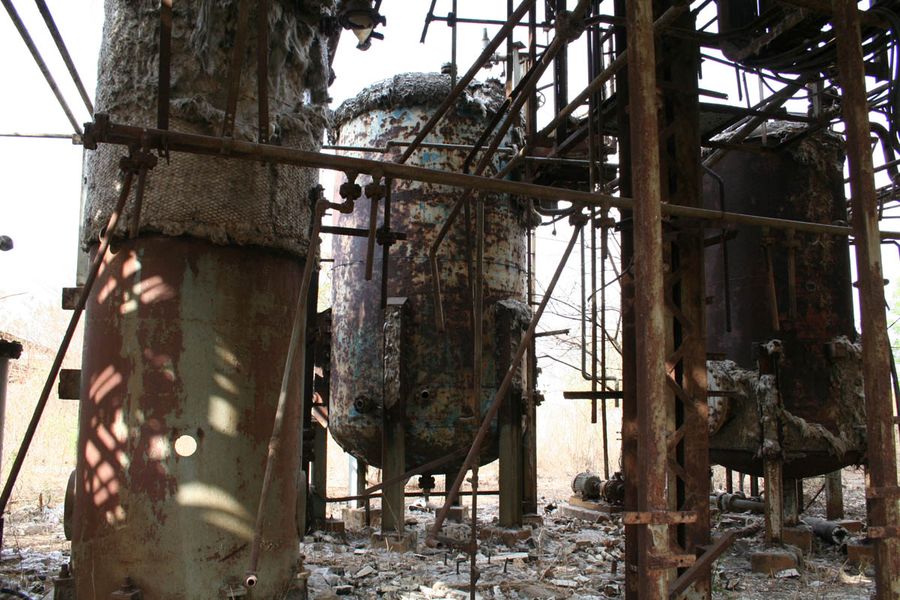
On the night of the release, the refrigeration unit that should have kept the methyl isocyanate cool had been shut down to save money and its coolant drained. The flare tower was out of service. The vent gas scrubber was on standby and undersized for the volume. The water curtain did not reach the height of the escaping gas. Staffing on the unit had been cut, and the instrumentation was known to be unreliable.
Union Carbide's position was that the release was sabotage by a disgruntled employee who introduced water into a tank. It commissioned an investigation that supported this. Indian authorities and independent analysts have rejected it, noting that the sabotage account still requires every safety system to have been non-functional for the release to reach the city.
The accountability question is the sharpest. Chairman Warren Anderson was arrested in India in 1984, released on bail, left the country, and never returned despite an Indian arrest warrant. A 1989 settlement of $470 million was reached with the Indian government, widely criticised as far too low. In 2010, seven Indian executives were convicted of criminal negligence and sentenced to two years each.
WHAT IS KNOWN
The state of the safety systems is documented and is not seriously disputed by any party.
The death toll is genuinely uncertain. The official figure is 3,787; the Indian government has cited over 15,000 in litigation, and long-term deaths from exposure are separately estimated in the tens of thousands.
Contamination of the site persists. Groundwater around the abandoned plant remains polluted, and remediation has never been completed.
Dow Chemical, which acquired Union Carbide in 2001, maintains that the 1989 settlement resolved all claims and that it has no liability. Indian courts continue to seek its appearance.
EVIDENCE FOR
- Documented disabling of refrigeration, flare tower, scrubber and water curtain, all at once.
- Documented staffing and maintenance reductions at the plant before the release.
- The chairman's departure from India while on bail and subsequent non-return.
- Convictions of Indian executives for criminal negligence in 2010.
EVIDENCE AGAINST (THE SABOTAGE DEFENCE, AND THE MAXIMAL CLAIM)
- Union Carbide's sabotage theory has never been substantiated, and no individual has been identified or charged.
- Even accepting sabotage, it does not explain why every safety system was simultaneously non-functional, which is the finding that actually matters.
- Attributing a specific death toll is genuinely difficult given the absence of baseline health data and the informal settlements around the plant, and confident figures in either direction should be treated carefully.
ASSESSMENT
Contested as to cause, confirmed as to negligence, and unresolved as to accountability forty years on. This office does not accept the sabotage account, and notes that it would not exculpate anyone if true, because a functioning plant survives a single act of interference. What is documented is a facility with every protective system disabled or inadequate, in a city, on a night when it mattered. What is absent is any senior person who answered for it.
WHAT WOULD CHANGE THE GRADE
- Not in dispute: every safety system was disabled, inoperative or undersized on the night. Refrigeration off and drained, flare tower out of service, scrubber on standby and undersized, water curtain too low.
- Union Carbide's sabotage defence has never been substantiated, no individual was ever identified, and it would not exculpate anyone if true, because a functioning plant survives a single act of interference.
- Unresolved after forty years: the death toll, which ranges from an official 3,787 to credible estimates above 15,000; site remediation, never completed; and senior accountability, since the chairman left India on bail and never returned.
FURTHER READING
- Bhopal gas survivors’ groups, Pithampur locals protest over Union Carbide wastehindustantimes.com, archived
- union carbide statementsbhopal.com, archived
- Bhopal Gas tragedy: In court, defence names former plant employee as ‘saboteur’indianexpress.com, archived
- Bhopal disaster · Wikipedia
- Indian Council of Medical Research, epidemiological studies on Bhopal exposure
- Dominique Lapierre and Javier Moro, Five Past Midnight in Bhopal (2001)
RELATED FILES IN THIS ARCHIVE
- OSA-126 · DIESELGATECONFIRMEDSoftware written specifically to cheat, in eleven million vehicles
- OSA-128 · C8 AND THE FOREVER CHEMICALSCONFIRMEDThe company knew for decades, and the science it hid was its own
- OSA-150 · THALIDOMIDECONFIRMEDMarketed as safe in pregnancy, on no evidence that it was
- OSA-172 · THE ASBESTOS PAPERSCONFIRMEDThe industry's own correspondence, produced in discovery