THALIDOMIDE
| MARKETED | From 1957, by Chemie Grunenthal, as Contergan and under many other names |
| HARM | Around 10,000 children born with malformations; roughly 40 percent died in infancy |
| WITHDRAWN | November 1961, after warnings from McBride and Lenz |
| STATUS | Confirmed. Grunenthal apologised in 2012, fifty years later |
THE CLAIM
That thalidomide was marketed as safe in pregnancy without evidence, that warnings were resisted, and that the manufacturer suppressed and disputed reports of harm for years while the drug continued to be sold.
THE THEORY, AS ITS PROPONENTS TELL IT
The essentials are not disputed and the case is included for what it establishes about regulation rather than about secrecy.
Thalidomide was developed by Chemie Grunenthal and marketed from 1957 as a sedative so safe it could not be used to overdose. It was promoted specifically for morning sickness. No adequate testing for effects on the developing foetus had been performed, and at the time no regulatory regime required any.
Reports of peripheral neuritis in adults began arriving from 1959, and the company disputed them and continued marketing. In 1961 the Australian obstetrician William McBride and the German paediatrician Widukind Lenz independently identified the link with birth malformations. Lenz presented his findings and the company resisted his conclusion before withdrawal followed.
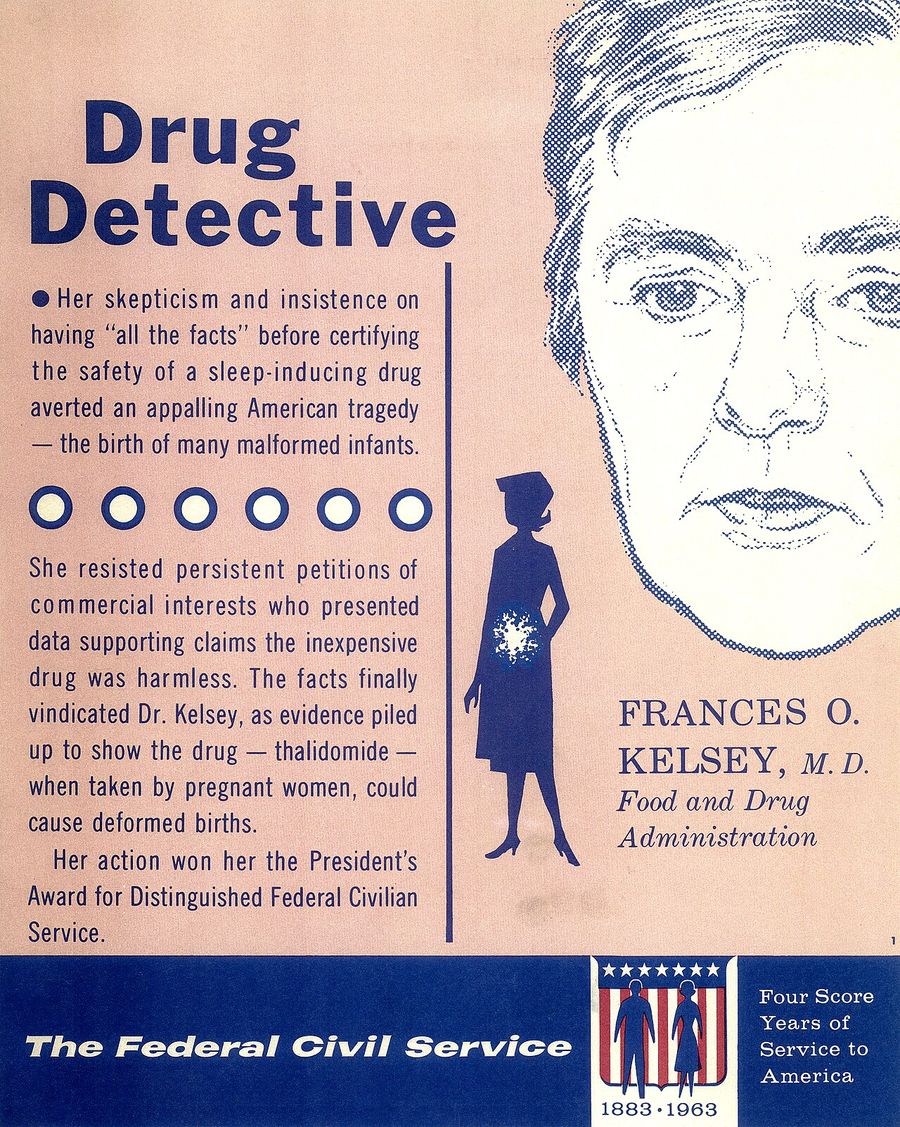
The United States is the exception that proves the argument. Frances Oldham Kelsey at the Food and Drug Administration refused approval repeatedly, on the ground that the safety data was inadequate, and withstood substantial pressure from the applicant. American exposure was limited to trial samples.
WHAT IS KNOWN
The scale is established: around ten thousand affected births across forty-six countries, with high infant mortality and lifelong disability for survivors.
The German criminal proceedings against Grunenthal executives ended in 1970 without verdicts, in a settlement that also limited civil liability. Survivors in several countries fought for compensation for decades.
Grunenthal issued its first apology in 2012, fifty years after withdrawal, and it was widely regarded as inadequate by survivor organisations.
The regulatory consequence was enormous and global. The Kefauver-Harris Amendment in the United States in 1962 required proof of efficacy and stricter safety evidence, and comparable regimes followed elsewhere. Modern drug regulation is substantially a response to this drug.
Thalidomide is now used successfully to treat leprosy complications and multiple myeloma, under strict pregnancy-prevention controls.
EVIDENCE FOR
- Marketing claims of safety in pregnancy that were unsupported by any testing.
- Documented resistance to early reports of neuropathy and to Lenz's findings before withdrawal.
- The 1970 termination of criminal proceedings alongside a liability-limiting settlement.
- A fifty-year gap between withdrawal and apology.
EVIDENCE AGAINST (THE STRONGEST READING)
- Teratogenicity testing was not standard practice in the 1950s, so the absence of it was a systemic failure as much as a company one.
- No evidence establishes that the company knew of the birth defect risk before the reports began arriving, as opposed to responding badly once they did.
- The regulatory response was real, rapid by the standards of the time, and effective.
ASSESSMENT
Confirmed, and included because it is the counter-example to most of this cabinet. There was no secret here. The drug was sold openly, the harm appeared in public, two doctors identified it within four years, and the system that failed was then rebuilt so thoroughly that modern pharmaceutical regulation is essentially its monument. What the file shares with OSA-017, OSA-106 and OSA-128 is only the last part: a company that disputed the evidence while the harm continued, and took fifty years to say sorry. The difference is that this time the fix arrived in four years rather than forty, and it is worth knowing why.
WHAT WOULD CHANGE THE GRADE
- CONFIRMED and not seriously disputed: marketed as safe in pregnancy without teratogenicity testing, resisted early reports, and withdrawn only after two doctors independently identified the link.
- Not established: that the company knew of the birth defect risk before the reports arrived, as opposed to responding badly once they did.
- Still open in the moral rather than evidential sense: German criminal proceedings ended in 1970 without verdicts in a settlement that also limited civil liability, and the first apology came in 2012.
FURTHER READING
- DailyMed - Search Results for Thalidomidedailymed.nlm.nih.gov
- Thalidomide | C13H10N2O4 | CID 5426 - PubChempubchem.ncbi.nlm.nih.gov
- Drugs@FDA: FDA-Approved Drugsaccessdata.fda.gov
- Thalidomide · Wikipedia
- Frances Oldham Kelsey · the FDA reviewer who refused approval
- The Sunday Times Insight team, Suffer the Children (1979)
RELATED FILES IN THIS ARCHIVE
- OSA-174 · BHOPALCONTESTEDForty tonnes of methyl isocyanate over a sleeping city
- OSA-017 · THE TOBACCO INDUSTRY COVER-UPCONFIRMED"Doubt is our product", the archetypal proven corporate conspiracy
- OSA-062 · THE RADIUM GIRLSCONFIRMEDTold the glowing paint was safe, taught to lick the brush
- OSA-066 · PURDUE PHARMA & OXYCONTINCONFIRMEDAn addiction claim built on a five-sentence letter to the editor