THE BUSINESS PLOT
| DATE | Alleged approaches 1933–34; testimony November 1934 |
| KEY WITNESS | Maj. Gen. Smedley D. Butler, USMC (ret.), twice awarded the Medal of Honor |
| FORUM | McCormack–Dickstein Committee, U.S. House of Representatives |
| OUTCOME | Core testimony credited in the committee's report; no prosecutions |
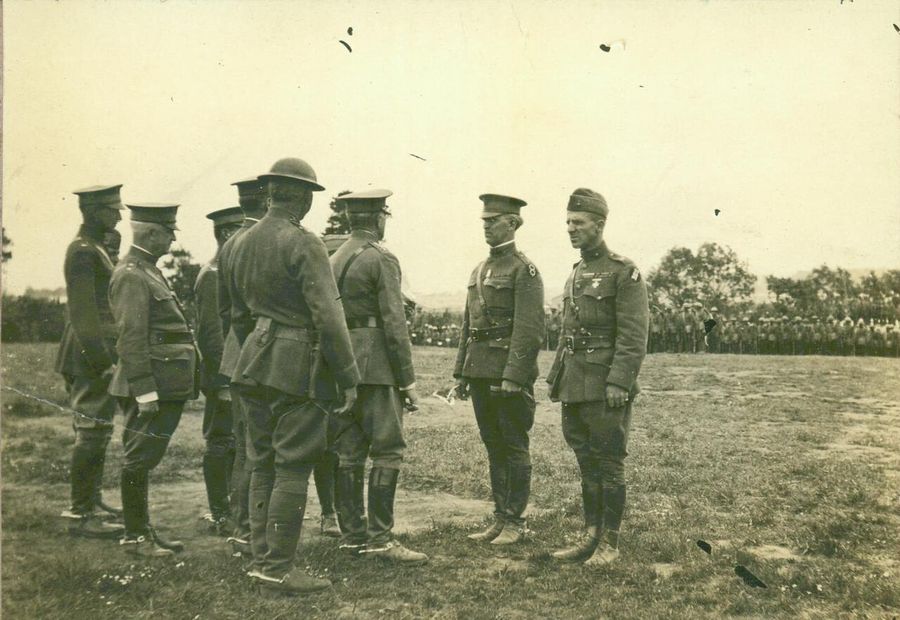
THE CLAIM
In 1933–34, a group of financiers and business figures hostile to the New Deal conspired to recruit a private army of veterans, install a strongman answerable to Wall Street, and reduce Franklin D. Roosevelt to a figurehead, and were foiled only because they pitched the job to the one general in America guaranteed to turn them in.
THE THEORY, AS ITS PROPONENTS TELL IT
The theory holds that in 1933 a group of Wall Street financiers and industrialists attempted to recruit a retired Marine Corps general to lead a veterans' march on Washington, force Franklin Roosevelt into a figurehead role, and install a fascist-style government modelled on the regimes then consolidating in Italy and Germany.
It has an unusual evidentiary basis for a coup theory: the intended leader reported it. Major General Smedley Butler, twice awarded the Medal of Honor and the most decorated Marine of his era, testified under oath to a congressional committee that he had been approached by bond salesman Gerald MacGuire, that he had been offered command of a force of 500,000 veterans, that the funding described ran to millions, and that names including du Pont and J.P. Morgan interests were invoked. Butler said he played along in order to learn the scope before reporting it.
The McCormack–Dickstein Committee reported in 1935 that it had "received evidence showing that certain persons had made an attempt to establish a fascist organization in this country," that the plot's existence was verified, and that it might have proceeded had Butler not exposed it. No one was prosecuted. The committee's published report omitted portions of the testimony naming prominent financiers, which proponents regard as the tell.
The theory's advocates argue the case is treated as folklore rather than history for reasons of embarrassment: an attempted coup against a sitting president by named members of the American business elite, verified in part by a congressional committee, that resulted in zero indictments, is a story with no comfortable place in the national narrative. Critics reply that Butler was the only witness to most of it, that MacGuire denied everything, and that a plot with no arms, no organisation and no second confirmed participant is a fantasy that never left a hotel room.
WHAT IS KNOWN
Smedley Butler was, at the time, the most famous Marine alive: twice a Medal of Honor recipient, a hero to the Bonus Army veterans, and by the 1930s a loud critic of what he called war profiteering. In November 1934 he testified before the McCormack–Dickstein Committee (a special House committee investigating fascist and communist activity) that a bond salesman named Gerald MacGuire, connected to broker Grayson M.-P. Murphy and heir Robert Sterling Clark, had courted him over months, flashing bankbooks, funding trips, and ultimately proposing that Butler lead an army of some 500,000 veterans on Washington to force the creation of a new "Secretary of General Affairs" who would govern while Roosevelt remained as ornament. Butler said the plotters invoked the American Legion and pointed to European veterans' movements, notably France's Croix-de-Feu, as the model.
Journalist Paul Comly French, whom Butler brought in as a witness, testified that MacGuire had spoken to him in similar terms. The committee's February 1935 report stated it had been able to verify Butler's pertinent statements, that there was credible evidence a plot had been discussed and planned, while noting it never got beyond the talking stage it could document. MacGuire denied everything under oath; the wealthy men named denied involvement, some ridiculing the story outright; portions of testimony naming prominent figures were omitted from the public record. No one was subpoenaed from the top tier, no one was prosecuted, and much of the press filed the affair under comedy, the "cocktail putsch." MacGuire died in 1935. The American Liberty League, the anti-New Deal group whose orbit overlapped with several named men, carried on lawfully and unsuccessfully.
EVIDENCE FOR
- A congressional committee, no friend of sensation, put in writing that it could verify the core of Butler's account of the approaches made to him.
- Butler was a witness of almost unimpeachable standing, with no evident motive to lie and much reputation to lose; he came forward rather than cash in.
- Independent corroboration from French, a working reporter, of MacGuire's intentions.
- The era supplies context, not proof: business hostility to Roosevelt was intense, and armed veterans' leagues were actively toppling or menacing governments in Europe.
EVIDENCE AGAINST
- The documented plot never advanced beyond conversations with Butler: no weapons, no funds demonstrably assembled for a coup, no second recruit who testified to the same offer in the same terms.
- Almost everything connecting the named financiers to the scheme runs through one man, MacGuire, who may have been exaggerating his backing, freelancing, or stringing along a famous general.
- Every named principal denied involvement, and historians remain divided between "serious conspiracy strangled in the crib" and "loose talk by men who never commanded anything more dangerous than a brokerage."
- The committee's decision not to pursue the principals can be read as suppression, or as a judgment that the case would not survive a courtroom.
ASSESSMENT
The unusual thing about this file is which half is solid. That Butler was approached, and that a coup was discussed, is about as well-attested as 1930s Washington gets, a congressional committee said so. What remains contested is altitude: whether the plot reached the boardrooms whose names Butler repeated, or died in the briefcase of an overpromoted bond salesman. The bureau notes, dryly, that the surest way to keep that question open forever was to investigate the messenger and excuse the principals, which is precisely what Congress did. Filed contested: the approach happened; the conspiracy's true size was never measured, because no one with subpoena power cared to measure it.
WHAT WOULD CHANGE THE GRADE
- CONFIRMED in part: Major General Smedley Butler testified, and the McCormack-Dickstein Committee reported that it found his account credible enough to verify in its essentials.
- To CONFIRMED as an operational plot: correspondence, financial records, or a second participant account tying named backers to a plan of action. The committee redacted names from its public report, referred nothing for prosecution, and the matter ended there.
- The committee's own records survive. A full release is the only route this file has left, and nobody has forced one.
FURTHER READING
- Franklin Delano Roosevelt Memorial (U.S. National Park Service)nps.gov
- Wikipedia: Business Plot
- Wikipedia: Smedley Butler
- Jules Archer, The Plot to Seize the White House (1973)
- Smedley Butler, War Is a Racket (1935), the witness in his own words
RELATED FILES IN THIS ARCHIVE
- OSA-051 · WATERGATECONFIRMEDThe break-in, the tapes, and the only presidential resignation
- OSA-052 · OPERATION AJAXCONFIRMEDThe CIA–MI6 coup that removed Iran's elected prime minister
- OSA-053 · OPERATION PBSUCCESSCONFIRMEDGuatemala's president overthrown by a radio station and a bluff
- OSA-158 · CHILE 1973CONFIRMEDThree years of covert action against an elected government