OPERATION PBSUCCESS
| PERIOD | Authorized 1953; executed June 1954 |
| THEATER | Guatemala; staging in Honduras and Nicaragua |
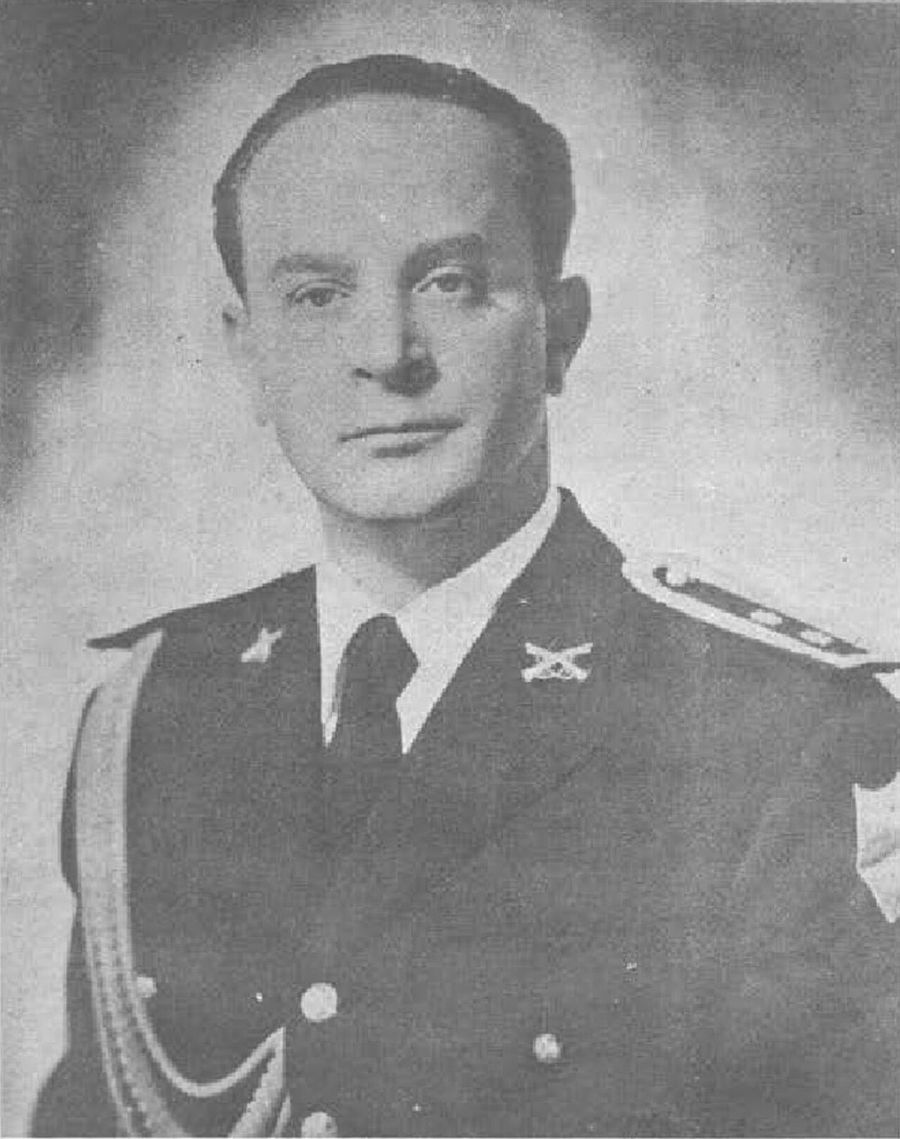
| PRINCIPALS | CIA; Col. Carlos Castillo Armas; the United Fruit Company (interested party) |
| ACKNOWLEDGED | CIA declassification, 1997 |
THE CLAIM
That the CIA manufactured the overthrow of Guatemala's elected president on behalf of Cold War strategy and, less officially, a fruit company's balance sheet, complete with a phantom invasion, a pirate radio station, and a shortlist of people to kill. Every clause of that sentence is now supported by the agency's own released files, save that the killing list, so far as the record shows, went unexecuted.
THE THEORY, AS ITS PROPONENTS TELL IT
The Guatemalan operation is the file that demonstrates how little force a coup requires when the target believes he is already surrounded.
The theory as proponents describe it: Jacobo Árbenz, elected with a substantial majority, expropriated uncultivated land held by the United Fruit Company and offered compensation at the value the company had declared for tax purposes. United Fruit's lobbying reached a US administration in which the Secretary of State and the CIA director had both had professional connections to the company's law firm. The operation that followed used a clandestine radio station broadcasting fabricated reports of a large rebel advance that did not exist, a handful of aircraft dropping leaflets and light ordnance, and a force of a few hundred men who never fought a serious engagement. The army declined to defend the government and Árbenz resigned.
The corporate-capture strand is the theory's core and the reason the file is in this cabinet: that a sovereign government was removed to protect the balance sheet of a fruit company, and that this was arranged by officials with prior ties to that company's interests. The Dulles connection is documented and is not seriously contested; whether it was decisive is where honest historians still differ.
The consequence claim: the coup was followed by thirty-six years of civil war in which a UN-backed truth commission later found that state forces were responsible for the overwhelming majority of more than 200,000 deaths, including acts it characterised as genocide against Maya communities. The CIA's own internal history, declassified in 1997, confirms the operation. What it does not do is account for what came after.
WHAT IS KNOWN
President Jacobo Árbenz, elected in 1950, pressed a land reform (Decree 900) that expropriated uncultivated holdings, including large tracts belonging to the United Fruit Company, a firm with superb Washington connections. The Eisenhower administration, framing Árbenz as a communist beachhead, authorized a covert removal: PBSUCCESS.
The operation armed a small exile force under Colonel Carlos Castillo Armas, but its real weapon was theater. A CIA-run clandestine station, "Radio Liberación," broadcast reports of a vast rebel advance that did not exist; agency aircraft bombed and buzzed the capital. The Guatemalan army, judging the United States itself to be behind the invasion, declined to fight for Árbenz, who resigned on June 27, 1954 and went into exile. Castillo Armas took power; Guatemala's subsequent decades of military rule and civil war killed, by the UN-backed truth commission's accounting, some 200,000 people.
For over forty years the U.S. denied involvement. In 1997 the CIA declassified roughly 1,400 pages of PBSUCCESS records, including "A Study of Assassination," an instructional paper on methods, and planning documents listing candidates for "disposal." In 1999, President Clinton, in Guatemala City, stated that U.S. support for Guatemalan military and intelligence forces during the ensuing repression "was wrong."
EVIDENCE FOR
- The CIA's own 1997 declassified operational files, including the assassination study and target-list planning.
- The State Department's Foreign Relations of the United States retrospective volume documenting the covert program.
- Contemporary paper trails linking United Fruit's lobbying to administration principals: Secretary of State John Foster Dulles and DCI Allen Dulles both had prior professional ties to the company.
- Historical scholarship (Gleijeses, Cullather, the latter a CIA staff historian whose internal study was itself declassified) converging on the same narrative.
EVIDENCE AGAINST (THE WILDER VERSIONS)
- "United Fruit ordered the coup" compresses too far: the company lobbied hard and profited, but the released record shows Cold War ideology doing most of the authorizing. The fruit and the flag pointed the same direction; the flag signed the paperwork.
- No evidence has surfaced that the assassination list was carried out as part of the operation; the documented planning is damning enough without embellishment.
- Árbenz tolerated Guatemala's small communist party but the claim he was a Soviet puppet, the operation's stated premise, is not supported by the archives of either side.
ASSESSMENT
PBSUCCESS matters less for its mechanics than for its aftermath: an elected government replaced with four decades of dictatorship and civil war, and a demonstration (noted attentively across Latin America, including by a young Che Guevara then in Guatemala City) that reform could summon regime change. As a covert action it worked; as policy it is difficult to locate the success the cryptonym promised. File alongside OSA-052 as the second panel of a matched set: same years, same playbook, same forty-year denial curve.
WHAT WOULD CHANGE THE GRADE
- CONFIRMED: the CIA's own declassified history, including Nick Cullather's internal account, later published openly as Secret History.
- The extension, that United Fruit directed the operation rather than benefiting from it, is where the record thins. The paper trail shows lobbying and shared personnel at the top of the administration. It does not show the company issuing instructions.
- The downstream record is not in dispute: the coup opened four decades of civil war, and the 1999 truth commission documented the result.
FURTHER READING
- 1954 Guatemalan coup d'état · Wikipedia
- Jacobo Árbenz · Wikipedia
- Secret History · Nick Cullather's declassified internal CIA account, published 1999
RELATED FILES IN THIS ARCHIVE
- OSA-052 · OPERATION AJAXCONFIRMEDThe CIA–MI6 coup that removed Iran's elected prime minister
- OSA-158 · CHILE 1973CONFIRMEDThree years of covert action against an elected government
- OSA-025 · THE BUSINESS PLOTCONTESTEDA general testified he was recruited to overthrow Roosevelt
- OSA-067 · THE REICHSTAG FIRECONTESTEDLone arsonist or Nazi setup, the argument that won't close