THE GULF OF TONKIN INCIDENT
| DATE | August 2 and 4, 1964 |
| LOCATION | Gulf of Tonkin, off North Vietnam |
| CONFIRMED | 2005, declassification of the NSA's internal history (Hanyok study) |
| STATUS | August 2 attack: real. August 4 attack: did not occur. |
THE CLAIM
That the second of the two reported North Vietnamese attacks on US destroyers in August 1964, the one that produced retaliatory airstrikes and the congressional resolution used to wage the Vietnam War, never actually happened, and that intelligence was mishandled to support the story that it did.
THE THEORY, AS ITS PROPONENTS TELL IT
The theory, now largely vindicated, held that the second Gulf of Tonkin engagement of 4 August 1964 never happened, and that the Johnson administration knew it had not happened when it used the incident to obtain from Congress the resolution that authorised the Vietnam War.
Proponents argued from the moment of the vote that the sequence was too convenient. A draft of the resolution had been prepared months in advance. The first engagement on 2 August was real but involved a US destroyer supporting covert South Vietnamese raids on the North, context withheld from Congress. The second was reported on a dark, stormy night by sonar operators on the USS Maddox and USS Turner Joy, and the pilot flying overhead, later Admiral James Stockdale, said publicly that he had looked down at "the black water" and seen no boats, no wakes, and no gunfire.
The stronger version held that the ambiguity was not merely exploited but manufactured, that intelligence was selectively presented, that contradictory signals traffic was suppressed, and that the administration proceeded to bomb North Vietnam knowing the pretext was hollow. Congress passed the resolution with two dissenting votes and the war that followed killed some 58,000 Americans and a far larger number of Vietnamese.
The theory was treated as anti-war paranoia for decades. It is now substantially the official history: the National Security Agency's own declassified internal study concluded that no attack occurred on 4 August and that signals intelligence had been mishandled and misrepresented. This file is retained less as a mystery than as the archive's clearest demonstration that a conspiracy theory about a war can simply turn out to be correct.
WHAT IS KNOWN
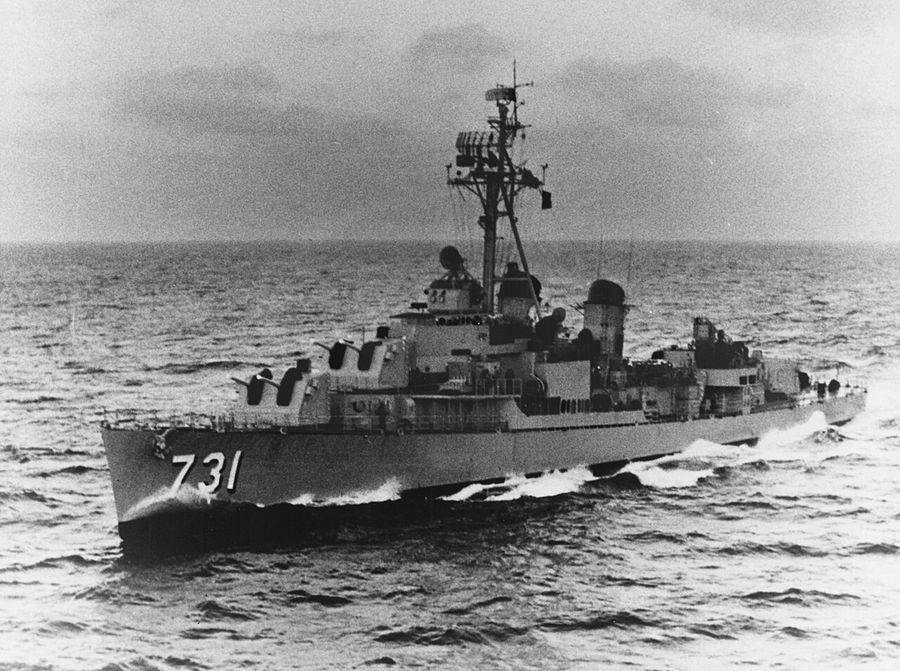
On August 2, 1964, North Vietnamese torpedo boats attacked the destroyer USS Maddox during a signals-intelligence patrol in the Gulf of Tonkin. That engagement is not in dispute; there was gunfire, aircraft, and a damaged torpedo boat. Context matters: the Maddox was on a DESOTO intelligence patrol while South Vietnamese commandos ran covert OPLAN 34A coastal raids nearby, from Hanoi's perspective, the two looked like one operation.
On the stormy night of August 4, the Maddox and USS Turner Joy reported a second attack: hours of maneuvering against radar and sonar contacts, with no visual confirmation and no debris. Doubts began aboard ship the same night; the Maddox's captain cabled that "freak weather effects" and an overeager sonarman made the reports questionable and recommended "complete evaluation before any further action taken." Navy pilot James Stockdale, who flew over the ships that night, later wrote he saw no enemy vessels at all. Within days President Johnson had ordered retaliatory strikes and Congress passed the Gulf of Tonkin Resolution (the House unanimously, the Senate 88–2) the legal foundation for a decade of war.
In 2005, the NSA declassified an internal history by agency historian Robert J. Hanyok concluding that no attack occurred on August 4, and that signals intelligence had been selectively cited and mistranslated in ways that sustained the attack narrative, intercepts actually referring to the August 2 action were presented as evidence for August 4. Robert McNamara, who assured Congress the evidence was conclusive, conceded decades later that the second attack likely never happened.
EVIDENCE FOR
- The declassified NSA history (Hanyok, published internally 2001, released 2005), the agency's own verdict on its own product.
- Same-night doubts in the operational cables from the Maddox, preserved in the Navy record.
- Stockdale's firsthand account as the aviator overhead, published in his 1984 memoir In Love and War.
- North Vietnam acknowledged the August 2 engagement but always denied August 4; postwar Vietnamese accounts, including Vo Nguyen Giap's 1995 conversation with McNamara, maintained the denial.
EVIDENCE AGAINST (THE WILDER VERSIONS)
- The pop-culture version, a wholly staged "false flag" with no attack at all, overshoots. The August 2 attack was real, and the record better supports confirmation bias, fog, and politically convenient certainty than a scripted fabrication of August 4 from nothing.
- Hanyok's study found intelligence was mishandled and skewed in presentation; it did not establish that the White House knowingly invented the attack in advance. Haste and motivated reading are documented; a written conspiracy is not.
- Comparisons to OSA-004 (Northwoods) should be handled with care: Northwoods was a proposal never executed; Tonkin was a misread event acted on at speed.
ASSESSMENT
CONFIRMED, the phantom attack is now the official history, signed by the NSA itself. The file's lesson is less cinematic than the folklore: no cabal was required, only ambiguous sensors, a leadership primed to escalate, and analysts who trimmed the take to fit the conclusion. Two senators voted no; one, Wayne Morse, said Congress would regret it. The stamp is settled. The regret is on record.
WHAT WOULD CHANGE THE GRADE
- CONFIRMED: NSA historian Robert Hanyok's internal study, written in 2001 and declassified in 2005 after press pressure, found that the 4 August 1964 attack did not happen and that signals intelligence was selectively presented to make it appear that it had.
- The 2 August engagement was real. Any account that denies it is arguing against the record.
- What remains open is intent: whether the misrepresentation was manufactured at the political level or was an intelligence failure that hardened as it moved up the chain. Hanyok's finding establishes the error and its direction, not the motive behind it.
FURTHER READING
- The Gulf of Tonkin Incident, 40 Years Latergwu.edu
- Wikipedia: Gulf of Tonkin incident
- Robert J. Hanyok, "Skunks, Bogies, Silent Hounds, and the Flying Fish," Cryptologic Quarterly (declassified 2005, National Security Archive)
- Edwin E. Moïse, Tonkin Gulf and the Escalation of the Vietnam War (1996)
RELATED FILES IN THIS ARCHIVE
- OSA-104 · OPERATION POPEYECONFIRMEDWeather as a weapon, five years of secret cloud seeding over Vietnam
- OSA-105 · THE PENTAGON PAPERSCONFIRMEDA classified study showing four administrations had misled the public
- OSA-177 · AGENT ORANGECONFIRMEDSeventy-five million litres of herbicide, contaminated with dioxin
- OSA-113 · THE PHOENIX PROGRAMCONFIRMEDOver 26,000 dead by the programme's own official count