INSLAW AND PROMIS
| DISPUTE | INSLAW Inc. v. US Department of Justice, over the PROMIS case management software |
| FINDINGS | Bankruptcy court 1988 and district court 1989 found DOJ took the software improperly |
| VACATED | 1991, by the Court of Appeals, on jurisdictional grounds |
| STATUS | Contested. The theft finding stands unreversed on the facts; the wider claims are unproven |
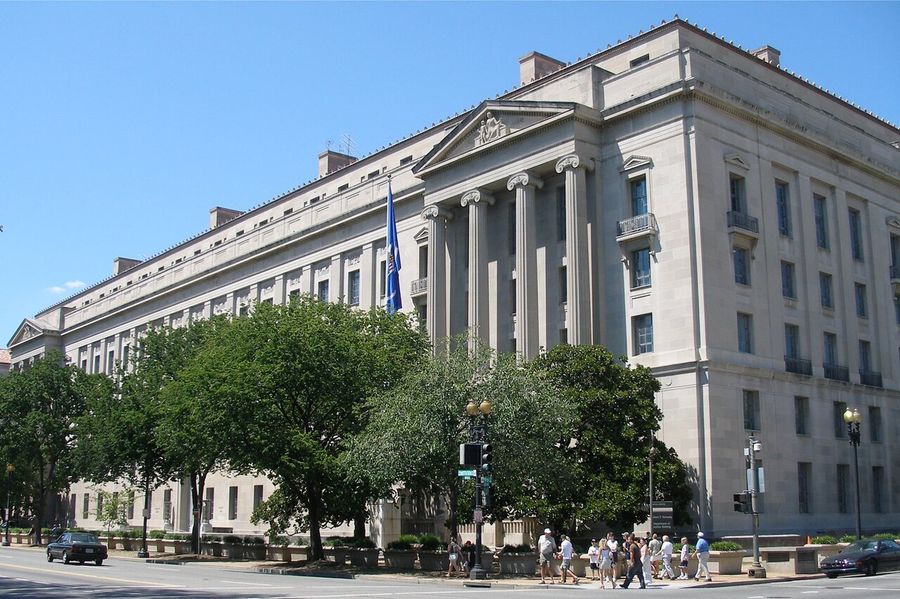
THE CLAIM
That the United States Department of Justice stole case management software from a private company, that modified copies containing a back door were sold to foreign intelligence services, and that a journalist investigating this was murdered.
THE THEORY, AS ITS PROPONENTS TELL IT
The claim has three tiers of very different strength, and almost every account collapses them.
Tier one is a contract dispute that two federal courts resolved against the government. INSLAW developed PROMIS, a case management system, under contract to the Justice Department. The department withheld payment, INSLAW went into bankruptcy, and in 1988 a bankruptcy judge found that the department had taken the enhanced version through trickery, fraud and deceit. A district court affirmed in 1989. In 1991 the Court of Appeals vacated on the ground that the bankruptcy court lacked jurisdiction, without disturbing the factual findings.
Tier two is the onward sale. It is alleged that modified copies with a covert back door were distributed to foreign intelligence and banking institutions, allowing American agencies to read their data. This is asserted by several figures including Michael Riconosciuto, whose reliability is heavily contested, and has never been documented.
Tier three is Danny Casolaro, a freelance journalist investigating what he called the Octopus, a claimed web linking INSLAW, October Surprise (OSA-069), BCCI (OSA-125) and Iran-Contra (OSA-013). He was found dead in a hotel bathroom in Martinsburg, West Virginia, in 1991, with deep cuts to both wrists. His notes were not recovered.
WHAT IS KNOWN
The court findings against the Justice Department are real, and were vacated on jurisdiction rather than reversed on the merits. Later reviews, including a 1994 Justice Department review and a court of federal claims proceeding, did not sustain INSLAW's claims.
Casolaro's death was ruled suicide. He had been treated for depression and had financial difficulties. The body was embalmed before his family was notified, which is genuinely irregular and is the strongest procedural objection.
The back door allegation has never been substantiated by any document, seizure, or foreign government complaint in forty years.
Riconosciuto, the principal source for the back door claim, was convicted of methamphetamine manufacture shortly after making his affidavit, which he attributed to retaliation.
EVIDENCE FOR
- Two federal court findings that the Justice Department took the software improperly.
- The vacatur was jurisdictional and did not address the factual findings.
- The irregular embalming of Casolaro's body before family notification.
- Casolaro's own contemporaneous statements to friends and family that he expected to be harmed.
EVIDENCE AGAINST
- Subsequent reviews and proceedings did not sustain INSLAW's claims, and the company did not ultimately prevail.
- The back door and foreign sale allegations rest on sources with serious credibility problems and have produced no document in four decades.
- The medical examiner found the wounds consistent with suicide, and Casolaro had documented depression and money troubles.
- The Octopus, as a unified conspiracy connecting four separate scandals, is exactly the shape of claim this archive treats most sceptically, and no version of it has ever been substantiated.
ASSESSMENT
Contested, and a useful lesson in how a real grievance becomes an unfalsifiable one. There is a genuine core here: two federal courts found that a government department took a small company's software improperly, and the reversal was procedural. That is a real finding and it was never disturbed on the facts. Attached to it is a sprawling structure of unverified claims about back doors and murdered journalists that has consumed forty years and produced nothing. This office grades the core seriously and the Octopus not at all.
WHAT WOULD CHANGE THE GRADE
- The core is real and is routinely buried under the rest: a bankruptcy court in 1988 and a district court in 1989 found that the Justice Department took the software through trickery, fraud and deceit. The 1991 vacatur was jurisdictional and did not disturb the factual findings.
- Not established in forty years: the back door and the sale to foreign services. No document, no seizure, no foreign complaint. The principal source has serious credibility problems.
- Danny Casolaro's death was ruled suicide, and he had documented depression and financial trouble. The genuinely irregular fact is that his body was embalmed before his family was notified.
- The Octopus, as a single conspiracy joining INSLAW, October Surprise, BCCI and Iran-Contra, is the shape of claim this archive treats most sceptically, and no version has ever been substantiated.
FURTHER READING
- 'American Conspiracy: The Octopus Murders' Explores Danny Casolaro Deathrollingstone.com, archived
- Part 31: Secret Government Program Linked To Local Murders?kesq.com, archived
- INSLAW · Wikipedia
- US Bankruptcy Court for the District of Columbia, findings in INSLAW v. United States (1988)
- US Department of Justice, review of the INSLAW matter (1994)
RELATED FILES IN THIS ARCHIVE
- OSA-180 · ENRONCONFIRMEDA company that reported profits it had invented, and the audit firm that signed it
- OSA-125 · THE BCCI AFFAIRCONFIRMEDThe largest bank fraud in history, and its intelligence clientele
- OSA-058 · OPERATION SNOW WHITECONFIRMEDA church put agents inside the IRS and the Justice Department
- OSA-179 · THE GM IGNITION SWITCHCONFIRMEDA switch that could turn the engine off, and the airbags with it