THE OCTOBER SURPRISE
| PERIOD | Summer–autumn 1980; hostages released 20 January 1981 |
| SUBJECT | Alleged contacts between the Reagan campaign and Iran |
| OFFICIAL FINDINGS | 1992 Senate and 1993 House task forces: no credible supporting evidence |
| REOPENED | 2023, by the firsthand account of Ben Barnes (New York Times) |
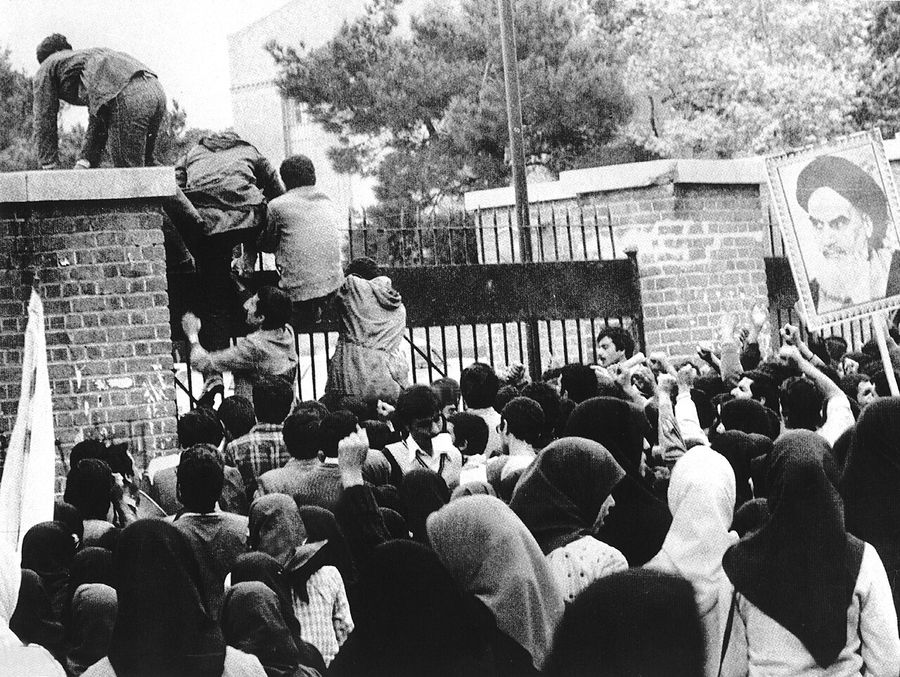
THE CLAIM
That during the 1980 campaign, associates of Ronald Reagan, with campaign manager William Casey most often named, secretly encouraged Iran to keep the 52 American embassy hostages until after the election, denying President Carter an "October surprise" release that might have saved his presidency.
THE THEORY, AS ITS PROPONENTS TELL IT
The theory holds that representatives of the 1980 Reagan campaign negotiated with Iranian officials to delay the release of the fifty-two American hostages until after the November election, in order to deny President Carter the political benefit of their return, and that the hostages were released minutes after Reagan's inauguration because that was the deal.
The timing is what has kept the file alive for forty-six years: the hostages had been held for 444 days and were released within half an hour of the oath of office. Proponents argue that this is not a coincidence anyone would accept in any other context.
The evidentiary chain has been troubled. Claims came from arms dealers, an Iranian businessman, and former Israeli intelligence figures, several of whom proved unreliable; the central allegation that campaign manager William Casey, later CIA director, attended meetings in Madrid or Paris was investigated by a Senate subcommittee and by a House task force, and both reported in 1992–93 that the evidence did not support it, with the House task force concluding there was "no credible evidence."
In March 2023 the New York Times reported an account from Ben Barnes, a former Texas lieutenant governor, who said he had accompanied former Texas governor John Connally on a Middle East tour in summer 1980 during which Connally told regional leaders that the Republicans would offer a better arms relationship if the hostages were held until after the election, and that Connally reported back to Casey. Barnes had no reason of self-interest to come forward and had kept it for over forty years. It is a firsthand account of the message being carried, not of a deal being struck, and it is why this file moved from dismissed to contested.
WHAT IS KNOWN
The Iran hostage crisis ran 444 days and dominated the 1980 election. The striking fact around which everything orbits is undisputed: Iran released the hostages on 20 January 1981, minutes after Reagan concluded his inaugural address. The allegation of an arranged delay circulated for a decade before former NSC staffer Gary Sick gave it mainstream force in a 1991 New York Times op-ed and book.
Congress then investigated twice. A Senate Foreign Relations subcommittee report (1992) and a House task force chaired by Lee Hamilton (January 1993) both concluded there was no credible evidence of a deal, finding key witnesses unreliable and alibi evidence against some alleged meetings, including claimed Casey meetings in Madrid. Journalist Robert Parry later reported archival material he argued the task force had discounted, including a 1991 White House memo referencing a Casey trip to Madrid; defenders of the task force's conclusion dispute its significance.
In March 2023, Ben Barnes, a former speaker of the Texas House, told the New York Times that in the summer of 1980 he accompanied former governor John Connally on a Middle East tour during which Connally conveyed to regional leaders a message for Tehran: the hostages should not be released before the election, because Iran would get a better deal from Reagan. Barnes said Connally briefed Casey afterward. Barnes said he came forward, with Carter in hospice care, to unburden the record. Connally died in 1993 and Casey in 1987; neither can respond, and the account does not establish that the message reached Iran or affected its decisions.
EVIDENCE FOR
- The release timing, minutes after the inauguration, has never received an innocent explanation that fully satisfies skeptics.
- The Barnes account is a named, firsthand, on-the-record statement by a participant with no evident motive to fabricate, published by a major outlet after corroboration of the trip itself.
- Casey's documented operational style and later Iran–Contra dealings with Tehran show the Reagan circle was willing to conduct back-channel Iran diplomacy.
- Parry's archival finds suggest the task force record was less complete than its conclusion implied.
EVIDENCE AGAINST
- Two bipartisan congressional investigations, with subpoena power, found the core allegations unsupported and several key sources fabricators.
- Iran had ample independent reasons to humiliate Carter personally and to hold out for the Algiers Accords, signed 19 January 1981, the release timing is explicable without any American conspiracy.
- The Barnes account, even taken at face value, documents a message sent, not a bargain struck; no Iranian confirmation of receipt or influence exists in the public record.
- No document, tape, or contemporaneous record of a campaign–Tehran agreement has surfaced in more than four decades.
ASSESSMENT
The Office stamps this CONTESTED rather than debunked because the 2023 Barnes account materially altered the file: the congressional findings addressed a specific set of claimed meetings and witnesses, not the Connally mission Barnes describes. It remains true that no evidence establishes an actual agreement, and Iran's own motives suffice to explain the timing. What would change the stamp: Iranian archival confirmation of the Connally message and its effect, or a documented paper trail from the campaign side, which forty-five years of searching has not produced.
WHAT WOULD CHANGE THE GRADE
- To CONFIRMED: a document, a flight record, or a corroborated participant account placing the named people at the claimed meetings. The 1992 House task force concluded the evidence did not support the allegation.
- In 2023, Texas politician Ben Barnes told the New York Times he had accompanied John Connally on a Middle East trip to pass a message to Iranian contacts. It is the most substantial first-person account the file has ever had, and it is uncorroborated.
- This file turns entirely on testimony that arrived after the participants were dead or beyond compulsion, which is a recurring shape in this archive and one worth recognising.
FURTHER READING
- October Surprise conspiracy theory · Wikipedia
- Gary Sick, October Surprise (1991); House October Surprise Task Force report (1993)
- Peter Baker, "A Four-Decade Secret," The New York Times (March 2023)
RELATED FILES IN THIS ARCHIVE
- OSA-013 · IRAN–CONTRACONFIRMEDMissiles to Tehran, money to Managua
- OSA-130 · IRAN AIR 655CONFIRMED290 civilians killed by a US missile cruiser in the Gulf
- OSA-162 · THE IRAQ WMD CASECONFIRMEDA war argued on intelligence that four inquiries found unsupportable
- OSA-169 · THE KHASHOGGI KILLINGCONFIRMEDA journalist killed inside his own country's consulate abroad