THE PROTOCOLS OF THE ELDERS OF ZION
| FABRICATED | Russia, circa 1903; first published in the St. Petersburg paper Znamya |
| SOURCE TEXTS | Plagiarized from Maurice Joly (1864) and Hermann Goedsche (1868) |
| EXPOSED | The Times of London, August 1921 (Philip Graves) |
| STATUS | Debunked for over a century. Still in circulation. |
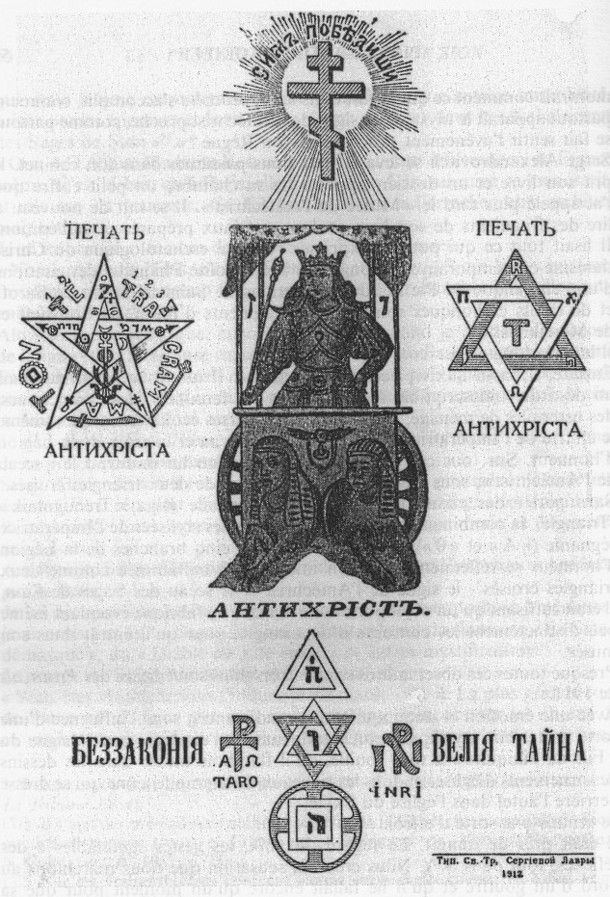
THE CLAIM
The Protocols purport to be the minutes of secret meetings in which Jewish leaders lay out a plan for global domination through control of finance, the press, and governments. Those who have promoted the document present it as captured proof of a real conspiracy.
THE THEORY, AS ITS PROPONENTS TELL IT
This file is inverted relative to the rest of the cabinet: the conspiracy theory here is the subject of study, not the framework. The Protocols of the Elders of Zion purports to be the minutes of a secret Jewish council planning world domination through control of finance, the press, and revolutionary movements. It is a forgery, and it is the most consequential forged document in modern history.
The theory it advances is the template from which a great many later conspiracy theories are cut: a hidden council, generational planning, control exercised through media and banking rather than armies, and a public that mistakes engineered events for accidents. Where later theories name Bilderberg, the Illuminati, or "globalists," the structural claim is frequently identical and the ancestry is direct and traceable.
The forgery was established definitively and early. In 1921 Philip Graves of The Times showed that long passages were plagiarised almost verbatim from Maurice Joly's 1864 satire Dialogue in Hell Between Machiavelli and Montesquieu, a work about Napoleon III containing no Jewish content whatever, with the speakers' names changed. A Swiss court in Bern ruled it a forgery in 1935. The Okhrana, the Tsarist secret police, is generally identified as the source.
None of that stopped it. It was serialised by Henry Ford in the Dearborn Independent and distributed in half a million copies; it was taught in German schools under the Nazi regime and used to justify extermination; and it remains in print and in circulation today. This office files it as the archive's most important cautionary case: a conspiracy theory does not need to survive fact-checking to do its work, because the people it recruits were never checking.
WHAT IS KNOWN
The Protocols are a fabrication, and their construction is documented in unusual detail. The text was assembled in Russia around the turn of the twentieth century (long attributed to circles around the tsarist secret police, though the precise authorship remains debated) and first published in 1903 in the antisemitic St. Petersburg newspaper Znamya. Its core was plagiarized, at length and often nearly verbatim, from Maurice Joly's 1864 Dialogue in Hell Between Machiavelli and Montesquieu, a French satire attacking the ambitions of Napoleon III that contains no Jewish theme whatsoever. The forgers put Joly's Machiavellian monologues into the mouths of invented Jewish conspirators, borrowing framing from a chapter of Hermann Goedsche's 1868 novel Biarritz, in which fictional rabbis meet at night in a Prague cemetery.
In August 1921, Philip Graves, the Constantinople correspondent of The Times of London, obtained a copy of Joly's forgotten book and published a side-by-side comparison demonstrating the plagiarism passage by passage. The forgery was thereby exposed in one of the world's most prominent newspapers within two decades of its fabrication. In the Berne Trial of 1934–35, a Swiss court heard extensive evidence on the document's origins and the judge declared the Protocols a forgery and "ridiculous nonsense"; an appeals court later set the verdict aside on the narrow ground that the statute invoked did not apply, a technicality that said nothing in the document's favor.
Exposure did not stop it. The Protocols circulated among White forces during the Russian Civil War amid pogroms that killed tens of thousands of Jews. Henry Ford's Dearborn Independent drew on them for the articles collected as The International Jew before Ford publicly retracted in 1927. Hitler invoked the Protocols in Mein Kampf, and Nazi propaganda used them heavily; the regime that promoted them proceeded to murder six million Jews. New editions continue to be printed and distributed today.
THE CASE MADE FOR IT
- Promoters have argued that the document's "predictions" match later events. This is the forgery's design, not its vindication: it is written as an all-purpose explanation, vague enough to be retrofitted onto any development.
- Some defenders conceded the fabrication but claimed the text was "true anyway." This argument, that a proven fake should be believed for its conclusions, abandons evidence entirely, and was already being made, and answered, in the 1920s.
EVIDENCE AGAINST
- The demonstrated plagiarism: extended passages track Joly's 1864 satire, a text with no Jewish content, line for line. No authentic document plagiarizes a novel.
- No original minutes, no named authors, no provenance, only a chain of antisemitic publicists asserting one another's copies.
- A century of scholarship, journalism, and judicial findings, beginning with The Times in 1921, uniformly identifying the text as fabricated.
ASSESSMENT
This is the sternest file in the archive. The Protocols are not a mystery, a curiosity, or a debatable text: they are a proven forgery whose fabrication is understood down to its source novels, and they are the deadliest document of their kind ever produced. Exposed in 1921, they were used afterward (knowingly, by people who had every means to check) to justify pogroms and to feed the propaganda of a regime that carried out the Holocaust. The file is retained not because the question is open but because the mechanism must stay on record: a fabricated conspiracy, once loose, does not need to be true to kill. It needs only to be useful. Every reader who encounters the Protocols cited as evidence should understand that they are looking at the most thoroughly debunked text in modern history, still doing its work.
WHAT WOULD CHANGE THE GRADE
- Closed in court: the 1935 Berne trial found it plagiarised, and its source is identifiable line by line from Maurice Joly's 1864 satire on Napoleon III, a work with nothing whatever to do with Jews.
- To reopen: nothing. This is the most completely demonstrated forgery in the archive, and it has been demonstrated repeatedly, in more than one language and more than one jurisdiction.
- It remains in print and in circulation worldwide, which is the actual subject of this file. A document can be conclusively disproven and lose none of its power, and that fact is more important than the forgery itself.
FURTHER READING
- The Protocols of the Elders of Zion · Wikipedia overview.
- Maurice Joly, the satirist whose work was stolen.
- Berne Trial, the 1934–35 Swiss proceedings.
RELATED FILES IN THIS ARCHIVE
- OSA-058 · OPERATION SNOW WHITECONFIRMEDA church put agents inside the IRS and the Justice Department
- OSA-125 · THE BCCI AFFAIRCONFIRMEDThe largest bank fraud in history, and its intelligence clientele
- OSA-180 · ENRONCONFIRMEDA company that reported profits it had invented, and the audit firm that signed it
- OSA-184 · INSLAW AND PROMISCONTESTEDA software company, a stolen program, and a journalist found dead in a bathtub