THE VELA INCIDENT
| DATE | 22 September 1979, approximately 00:53 GMT |
| LOCATION | Southern Indian Ocean / South Atlantic, near the Prince Edward Islands |
| DETECTION | US Vela satellite 6911, bhangmeter double flash, Alert 747 |
| STATUS | Officially unattributed. Contested between a White House panel and several US agencies |
THE CLAIM
That a nuclear weapon was detonated in the atmosphere over the southern ocean in September 1979 (most probably an Israeli test, possibly conducted with South African cooperation) and that the United States government, facing an inconvenient finding during a delicate diplomatic period, convened a panel that produced the answer it needed.
THE THEORY, AS ITS PROPONENTS TELL IT
The theory holds that the double flash recorded by Vela satellite 6911 on 22 September 1979 was exactly what the instrument was built to detect (an atmospheric nuclear test, most probably Israeli, possibly conducted with South African cooperation) and that the White House convened a scientific panel to produce a finding it could live with.
The instrument argument is the core. The bhangmeter signature of a nuclear fireball is highly specific: a brief intense flash, a dip as the expanding shock front becomes opaque, then a second longer and brighter peak. Vela 6911 had recorded forty-one previous detonations and correctly identified every one. Proponents argue that a purpose-built detector with a perfect record reporting its target signal is evidence, and that the burden falls on those explaining it away.
The corroboration came from unrelated systems. Arecibo recorded an anomalous travelling ionospheric disturbance that morning. The Naval Research Laboratory's hydroacoustic analysis was consistent with an explosion near the Prince Edward Islands. Low levels of iodine-131 subsequently appeared in Australian sheep thyroids. Elements of the Defense Intelligence Agency and NRL dissented from the White House panel's conclusion.
The political argument is where the file becomes a conspiracy file rather than a physics dispute. A confirmed test in September 1979 would have obliged the Carter administration to apply non-proliferation sanctions to Israel during the implementation of the Camp David framework, and to South Africa at a delicate moment. Declassified material shows the panel worked in that environment. Proponents do not claim the scientists lied; they claim the question put to them, and the answer that could be tolerated, were shaped before they sat down.
WHAT IS KNOWN
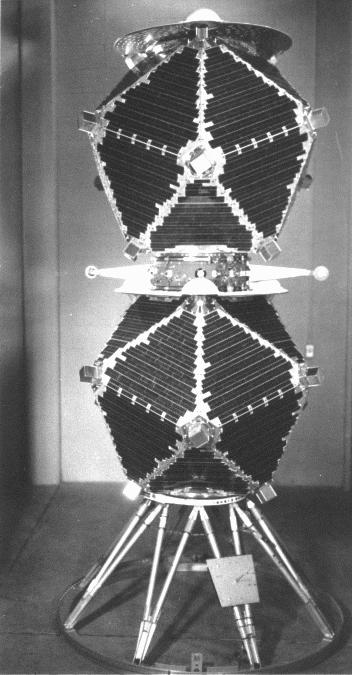
The Vela satellites were built to detect atmospheric nuclear tests, using instruments called bhangmeters that record the characteristic optical signature of a nuclear fireball: a very brief intense flash, a dip as the shock front becomes opaque, then a second longer and brighter flash. This double-humped curve is not produced by anything else in nature. Vela 6911 had by 1979 correctly identified forty-one nuclear detonations.
At 00:53 GMT on 22 September 1979, Vela 6911 recorded the double flash over the ocean between South Africa and Antarctica, in the vicinity of the Prince Edward Islands. The yield implied was small, in the low kilotons. The alert designation was 747.
The Carter White House convened an ad hoc panel of scientists chaired by Jack Ruina of MIT. Reporting in 1980, the panel concluded the signal was probably not from a nuclear explosion, favouring a "zoo event", most likely sunlight scattered from a small meteoroid striking the satellite, producing a spurious double-humped reading. The panel noted that only one of the two Vela satellites in position had recorded it and that some expected corroboration was absent.
Other evidence pointed the other way. The Arecibo Observatory recorded an anomalous travelling ionospheric disturbance moving south to north that morning. The Naval Research Laboratory analysed hydroacoustic data from the region and concluded it was consistent with an explosion near the Prince Edward Islands. Low levels of iodine-131 were subsequently reported in the thyroids of sheep in parts of Australia. Elements of the Defense Intelligence Agency and NRL dissented from the White House panel's conclusion, judging that a test had probably occurred.
The geopolitical context is material. South Africa did build a small nuclear arsenal and later dismantled it, disclosing the programme in 1993, the only state ever to do so. In 1997 the South African deputy foreign minister Aziz Pahad was reported as confirming the 1979 event was a South African test; his office subsequently said his remarks had been mischaracterised. Documents declassified since, and analysis by researchers including Leonard Weiss and the National Security Archive, have strengthened the case for an Israeli test, possibly with South African logistical involvement, and have shown that the White House panel operated under pressure at a moment when the administration was pursuing nuclear non-proliferation objectives and an Israeli-Egyptian peace framework.
EVIDENCE FOR
- The bhangmeter signature is highly specific and the instrument had a forty-one for forty-one record of correct identifications before this event.
- Independent corroboration from two unrelated physical systems, the Arecibo ionospheric disturbance and the NRL hydroacoustic analysis, both consistent with an explosion in that region at that time.
- Iodine-131 in Australian sheep thyroids in the weeks following, consistent with fallout carried on prevailing winds.
- Dissent from within the US government itself: DIA and NRL analysts did not accept the White House panel's conclusion.
- Declassified documents show the panel was convened and operated in a politically loaded environment with an identifiable preferred answer.
- Both candidate states had the capability, the motive, and, in South Africa's case, an admitted weapons programme.
EVIDENCE AGAINST
- The Ruina panel was composed of serious scientists and its meteoroid explanation is physically coherent; small debris impacts can in principle produce spurious optical readings.
- The second Vela satellite in position did not record the event, and no conclusive fallout signature was ever collected by aircraft sampling flights despite an effort to do so.
- South Africa's post-apartheid disclosure of its nuclear programme was remarkably complete and did not include a 1979 atmospheric test, a state that admitted building six weapons had little left to hide.
- Israel has never confirmed or denied any nuclear capability, so the attribution rests on inference rather than any admission.
- The hydroacoustic and ionospheric data are suggestive rather than diagnostic, and were reinterpreted differently by different agencies at the time.
ASSESSMENT
CONTESTED, and this office closes the archive on it deliberately. File 100 is the pattern in miniature. A purpose-built instrument with a perfect record reported exactly what it was designed to report. The physical corroboration was partial but real, and came from unrelated systems. And a panel convened by the executive, at a moment when a confirmed finding would have been diplomatically catastrophic, concluded that the instrument was probably wrong. Nothing in that sequence proves a cover-up; a satellite with forty-one correct calls can still make a forty-second error. But it illustrates the question this cabinet has been asking in ninety-nine other forms: what do you do when the evidence and the official conclusion point in different directions, and the body that reached the conclusion had a stake in it? The honest answer, here and throughout, is that you write down both, you say which way the evidence leans, and you leave the file open.
WHAT WOULD CHANGE THE GRADE
- To CONFIRMED: the withheld data. Vela 6911 recorded a double flash on 22 September 1979 carrying the characteristic optical signature of an atmospheric nuclear detonation, a signature the satellite had correctly identified dozens of times before.
- The 1980 Ruina panel concluded it was probably a sensor artifact from a micrometeoroid strike. Los Alamos scientists dissented at the time and have continued to, and later material, including hydroacoustic records and reported iodine-131 in Australian sheep thyroids, points the other way.
- Specialist opinion has moved toward an Israeli test, possibly jointly with South Africa. This file stays contested because the raw sensor data and most of the intelligence assessment remain classified forty-five years later, which makes it a withheld-evidence problem rather than a scientific one.
FURTHER READING
- The Nuclear Detonation Detection System on the GPS satellites (Technical Report)osti.gov
- Vela incident · Wikipedia
- The National Security Archive, George Washington University, declassified document collections on the 1979 event
- The Vela Incident: Nuclear Test or Meteoroid? · Leonard Weiss, Bulletin of the Atomic Scientists
RELATED FILES IN THIS ARCHIVE
- OSA-061 · PROJECT SUNSHINECONFIRMEDThe government collected human bones to measure fallout
- OSA-122 · CASTLE BRAVOCONFIRMEDThe worst radiological accident in US history, and the islands not evacuated
- OSA-160 · STUXNETCONFIRMEDSoftware built to physically destroy Iranian centrifuges
- OSA-071 · THE HAMMARSKJÖLD CRASHCONTESTEDA UN Secretary-General down nine miles short of the runway