THE AMBER ROOM
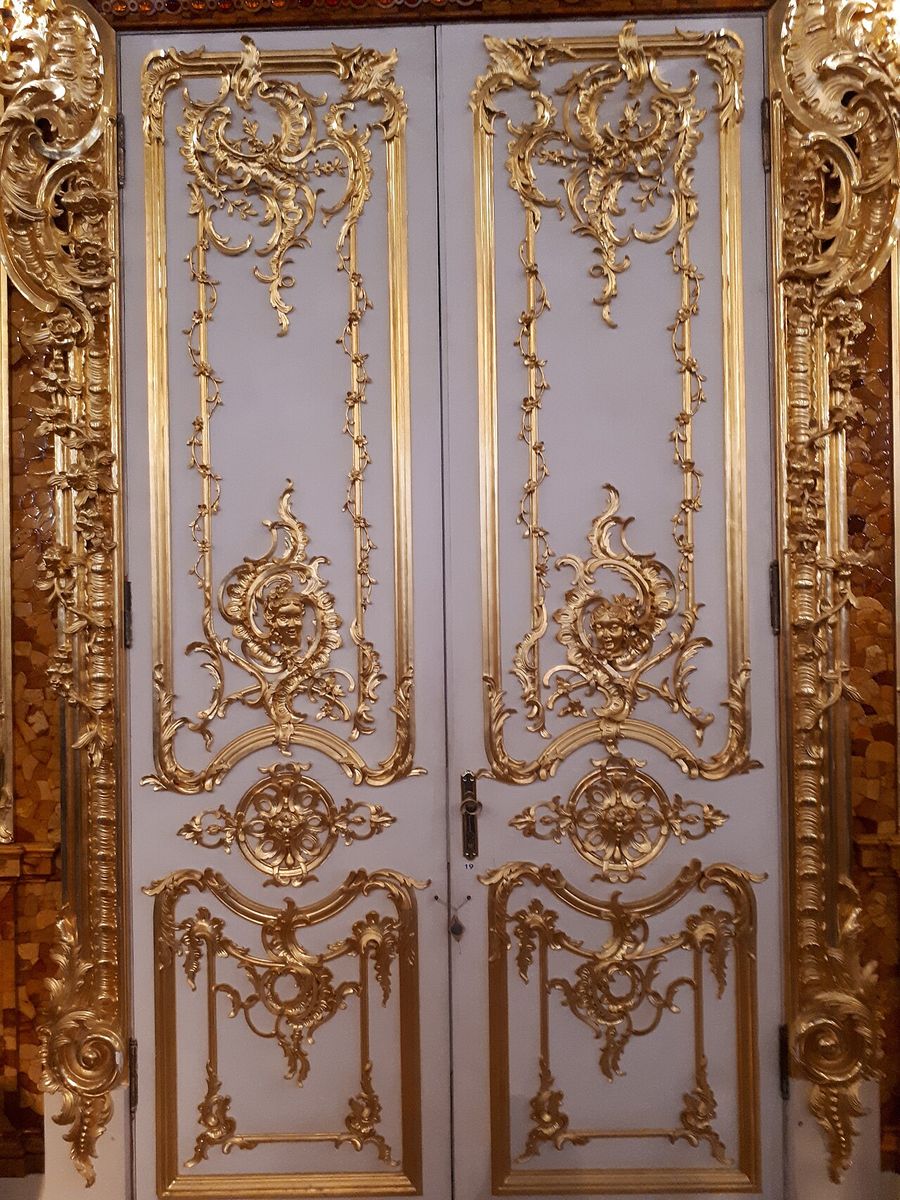
| CREATED | Completed 1755, Catherine Palace, Tsarskoye Selo, from around six tonnes of amber |
| LOOTED | October 1941, by German forces, dismantled in 36 hours |
| LAST SEEN | Königsberg Castle, 1944, crated |
| STATUS | Open. A reconstruction was completed in 2003; the original has never been found |
THE CLAIM
That the Amber Room survived the war, was moved before Königsberg fell, and remains hidden, rather than having burned in the castle.
THE THEORY, AS ITS PROPONENTS TELL IT
The looting is established beyond dispute, so the file turns on a single question: was the room still in the castle when it burned.
German forces dismantled the panels in 1941 and shipped them to Königsberg, where they were displayed and then crated as the war turned. The castle was heavily damaged by British bombing in August 1944 and by fighting during the Soviet capture in April 1945.
Proponents of survival point to the crating itself, which implies intent to move, to the documented German programme of hiding looted art in mines and bunkers, and to reports of convoys leaving the city. Candidate locations have included mines in Saxony, a bunker complex in Poland, and the wreck of the Wilhelm Gustloff, sunk in January 1945 with thousands aboard.
Against that is the simplest reading: amber burns. It is fossilised resin and is highly flammable. If the crates were in the castle during the fire, the room is gone, and the absence of any recovered fragment in eighty years is what the destruction account predicts.
WHAT IS KNOWN
Two original pieces have been recovered and authenticated: a Florentine mosaic panel and an amber chest, both surfacing in Germany in 1997 through a family whose relative had been a soldier involved in the packing. They were returned to Russia.
Those recoveries are the strongest evidence that at least some items left the castle, and they are also consistent with individual looting rather than with the room's survival as a whole.
A full reconstruction was completed at the Catherine Palace in 2003, funded substantially by a German company, using historical photographs and Kaliningrad amber.
Numerous searches have been conducted in mines, bunkers and lakes across Germany, Poland and Russia. None has produced anything.
EVIDENCE FOR
- The panels were crated, which indicates intent to move them.
- Two authenticated original pieces surfaced in Germany in 1997, proving some items left.
- A documented German practice of concealing looted art in mines and bunkers.
- Reported convoys leaving Königsberg before the Soviet capture.
EVIDENCE AGAINST
- Amber is highly flammable, and the castle burned thoroughly.
- Eighty years of searching by well-resourced parties has produced not one confirmed fragment from a room weighing six tonnes.
- The two recovered pieces are consistent with an individual soldier taking souvenirs during the packing, which is what the family's account described.
- Soviet investigators at the time concluded it had been destroyed, having had immediate access to the site.
ASSESSMENT
Open, and probably destroyed. This office grades it open because the crating and the 1997 recoveries are real facts that a flat destruction verdict has to accommodate, and because no fragment has ever been recovered from the site either. The honest position is that the survival theory requires six tonnes of a highly distinctive material to have stayed hidden for eighty years through the most intensively searched period in European history, and the destruction theory only requires amber to have done what amber does.
WHAT WOULD CHANGE THE GRADE
- Open, and probably destroyed. Amber is fossilised resin and highly flammable, the castle burned thoroughly, and eighty years of well-resourced searching has not produced one confirmed fragment of a six-tonne object.
- What a flat destruction verdict has to accommodate: the panels were crated, which indicates intent to move, and two original pieces surfaced in Germany in 1997 and were authenticated and returned.
- Those two pieces are equally consistent with a soldier taking souvenirs during the packing, which is what the family who produced them described.
FURTHER READING
- The Mystery of the Amber Room - An Historical Profileeuropeanhistory.about.com, archived
- A Brief History of the Amber Roomsmithsonianmag.com
- Amber Room · Wikipedia
- Adrian Levy and Cathy Scott-Clark, The Amber Room (2004)
- Catherine Palace reconstruction records, completed 2003
RELATED FILES IN THIS ARCHIVE
- OSA-047 · THE OAK ISLAND MONEY PITUNVERIFIED230 years of digging, six deaths, zero treasure
- OSA-110 · THE BEALE CIPHERSOPEN CASETwo unsolved ciphers said to locate a vault of gold in Virginia
- OSA-011 · OPERATION PAPERCLIPCONFIRMEDNazi scientists, freshly laundered dossiers
- OSA-055 · UNIT 731 & THE IMMUNITY DEALCONFIRMEDHuman experiments in Manchuria, and the data America bought