UNIT 731 & THE IMMUNITY DEAL
| PERIOD | 1936–1945; immunity arrangement 1946–1948 |
| THEATER | Pingfang, near Harbin, Japanese-occupied Manchuria; field sites across China |
| PRINCIPALS | Imperial Japanese Army; Lt. Gen. Shirō Ishii; postwar, US occupation authorities and Camp Detrick investigators |
| VICTIMS | Thousands killed in experiments; far more in biological attacks on Chinese cities |
THE CLAIM
Two claims, both long denied. First: that the Imperial Japanese Army operated a biological-warfare program that performed lethal experiments on human beings. Second: that after the war, the United States shielded the program's leadership from prosecution in exchange for its research data. Both are established fact.
THE THEORY, AS ITS PROPONENTS TELL IT
The wartime crimes are documented. The theory concerns the deal that followed, and it was denied by the United States for four decades.
The claim: Japan's biological warfare programme in occupied Manchuria conducted lethal experiments on thousands of prisoners (Chinese, Korean, Russian and some Allied) including deliberate infection with plague, anthrax and cholera, vivisection without anaesthetic, frostbite studies, and pressure-chamber testing. Weaponised plague fleas were released over Chinese cities. And then, at the war's end, the United States granted the programme's leadership immunity from prosecution in exchange for the research data, and concealed the arrangement.
The immunity arrangement is now supported by declassified American documents, including internal correspondence weighing the intelligence value of the data against the propriety of prosecution and concluding in favour of the data. General Shiro Ishii was never tried. Several of his colleagues went on to prominent postwar careers in Japanese medicine and pharmaceuticals. The Soviet Union prosecuted a small number of personnel at Khabarovsk in 1949; the Western response at the time was to characterise those proceedings as propaganda.
The extended strand, that the data was scientifically valuable and shaped the American biological warfare programme at Fort Detrick, is where historians divide. Several analyses conclude the material was of poor scientific quality and that the immunity purchased little. Proponents answer that the value of the bargain is beside the point: the bargain was made, it was hidden, and the men who made it knew what they were buying and from whom.
WHAT IS KNOWN
Unit 731, headquartered at Pingfang near Harbin in occupied Manchuria under Lt. Gen. Shirō Ishii, was the center of Japan's biological-warfare network. Its staff infected prisoners (Chinese civilians and soldiers, Soviet nationals, Koreans, and others, whom the unit called maruta, "logs") with plague, anthrax, cholera, and typhoid; conducted frostbite experiments; and performed vivisections, frequently without anesthesia. No prisoner is known to have left the Pingfang facility alive. Estimates place the dead there in the thousands, with victims of the wider network and of field attacks, plague-infected fleas and contaminated materials dropped on Chinese cities such as Ningbo and Changde, reaching far higher.
After Japan's surrender, the unit destroyed its facilities and its leadership returned home. Investigators from Camp Detrick (later Fort Detrick), the U.S. Army's biological-warfare center, interviewed Ishii and his colleagues between 1945 and 1947; the resulting reports (Sanders, Thompson, Fell, and the Hill–Victor report of late 1947) recorded the human-experiment data in detail. Declassified records show U.S. authorities concluded the data's value outweighed prosecution: the principals of Unit 731 were not charged at the Tokyo war-crimes tribunal, and the information was withheld from it.
The Soviet Union tried twelve captured members at the Khabarovsk trial in 1949; the United States publicly dismissed the proceedings as propaganda while privately holding corroborating files. Public exposure came decades later, through Japanese journalist Seiichi Morimura's The Devil's Gluttony (1981), the work of historian Sheldon Harris, and declassified U.S. documents. Japanese courts, notably a 2002 Tokyo District Court ruling, have acknowledged that the unit existed and waged biological warfare in China, while denying compensation claims; official Japanese acknowledgment remains partial.
EVIDENCE FOR
- Declassified U.S. investigative reports from the Camp Detrick interviews, describing the human-experiment data and the immunity rationale.
- Sworn testimony and documentary evidence from the 1949 Khabarovsk trial, later corroborated by Western archives.
- Testimony of former unit members, many of whom spoke publicly in Japan from the 1980s onward.
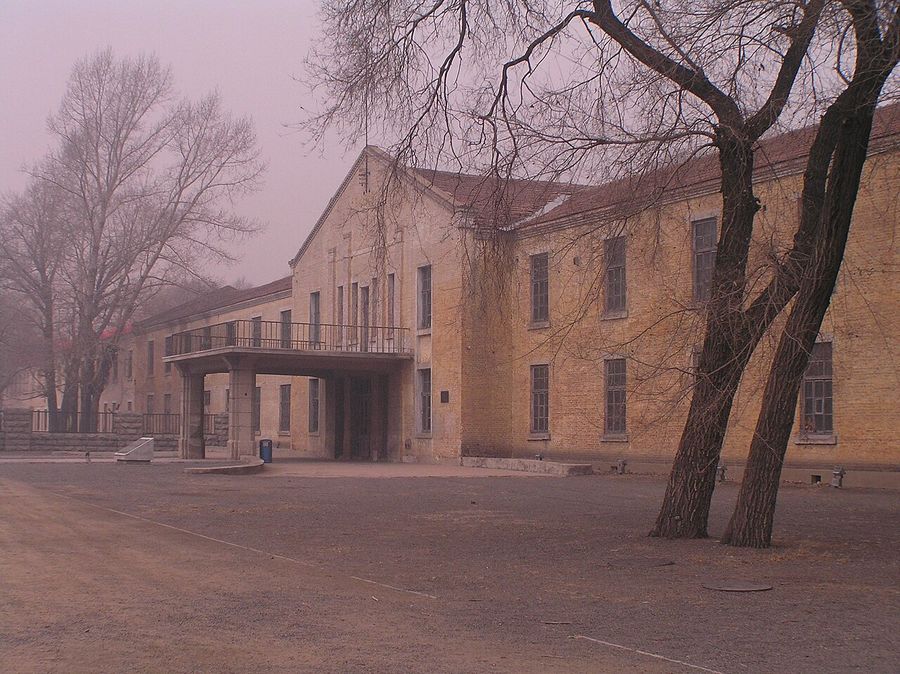
- Physical evidence, including remains and the preserved Pingfang site, now a museum and protected ruin in Harbin.
EVIDENCE AGAINST (THE WILDER VERSIONS)
- Precise victim totals vary across sources; responsible historians give ranges, and this file follows them. Uncertainty about numbers is not uncertainty about the crimes.
- Claims that the acquired data materially advanced postwar U.S. bioweapons work are debated; several American reviewers judged much of it scientifically poor. The moral character of the bargain does not depend on the data's quality.
- Allegations connecting Unit 731 veterans to specific postwar outbreaks remain unproven.
ASSESSMENT
This file contains no irony. Unit 731 is among the gravest documented atrocities of the twentieth century, and the immunity arrangement is a documented decision by a democracy to price those crimes against laboratory data, then to keep the ledger sealed for a generation. The record survived because journalists, historians, and former perpetrators eventually spoke, and because the paperwork of the bargain itself was preserved. The bureau's only note: silence was policy, on two sides of the Pacific, and it nearly held.
WHAT WOULD CHANGE THE GRADE
- CONFIRMED: the unit existed, the experiments happened, and the United States granted immunity from prosecution in exchange for the data.
- The common extension, that the data was scientifically valuable, is largely refuted. American assessments found much of it of little use, which makes the bargain worse rather than better.
- Japan has never fully opened its wartime medical archives, so the victim count remains an estimate rather than a figure, and the identities of most of them are permanently lost.
FURTHER READING
- Unit 731 · Wikipedia
- Khabarovsk war crimes trials · Wikipedia
- Factories of Death · Sheldon H. Harris, 1994
RELATED FILES IN THIS ARCHIVE
- OSA-121 · PROJECT 112 AND SHADCONFIRMEDShipboard and land tests of live agents on American servicemen
- OSA-014 · OPERATION SEA-SPRAYCONFIRMEDThe Navy fogged San Francisco with bacteria
- OSA-103 · THE GUATEMALA EXPERIMENTSCONFIRMEDAmerican researchers infected Guatemalans with syphilis on purpose
- OSA-154 · EDGEWOOD ARSENALCONFIRMEDUS soldiers exposed to nerve agents and incapacitants in testing