AMERITHRAX
| PERIOD | Mailings September–October 2001; case formally closed February 2010 |
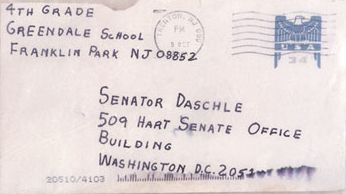
| LOCATION | Letters postmarked Trenton, New Jersey; targets in New York, Florida, and Washington, D.C. |
| CASUALTIES | 5 dead, 17 infected |
| STATUS | Closed by the FBI; contested by the National Academy of Sciences, the GAO, and Senator Leahy |
THE CLAIM
That the FBI's identification of army biodefense researcher Bruce Ivins as the lone anthrax mailer is unsafe, that the scientific case linking the letter spores to his laboratory flask was weaker than presented, that the behavioural case was assembled after the fact, and that the investigation was closed on a man who could no longer answer it.
THE THEORY, AS ITS PROPONENTS TELL IT
The theory is not that Bruce Ivins was framed. It is that the FBI closed a case it had not proved, on a man who could no longer contest it, after having already publicly destroyed the wrong suspect.
The Hatfill precedent is the foundation. The Bureau named Steven Hatfill a person of interest, surveilled him openly, and leaked to the press; he was never charged, was exonerated, and received roughly $5.8 million from the government. Proponents argue that an investigation demonstrably capable of confidently pursuing an innocent man for years should not be granted the presumption of accuracy on its second attempt.
The scientific objection is the substance, and it was raised by the National Academy of Sciences at the FBI's own request and expense. The 2011 review found that the genetic markers linking the letter spores to flask RMR-1029 were consistent with, but did not definitively demonstrate, the Bureau's conclusion, and that the certainty publicly asserted was not fully supported. A subsequent GAO review criticised the methodology and documentation. Colleagues disputed that Ivins had the equipment or expertise to produce the refined dry preparation in the Senate letters, and the Bureau never reproduced it from his laboratory.
The wider strands, that the attacks were intended to accelerate the case for war, that the early framing of the letters as Islamist was designed to be believed, that the Ames strain's distribution to more laboratories than the FBI acknowledged widens the suspect pool, are inference rather than evidence. The narrow objection does not need them: no indictment was ever tested, and the last independent body to examine the science declined to endorse it.
WHAT IS KNOWN
Beginning a week after the September 11 attacks, letters containing Bacillus anthracis spores were mailed to news organisations including NBC and the New York Post, and later to Senators Tom Daschle and Patrick Leahy. Five people died, including two postal workers, and seventeen were infected. The enclosed notes read in part "DEATH TO AMERICA" and "ALLAH IS GREAT," framing that investigators concluded early was misdirection.
The spores were identified as the Ames strain, a laboratory strain, which pointed the investigation at the domestic biodefense community rather than abroad. The FBI's first public focus fell on Steven Hatfill, a former USAMRIID scientist publicly named a "person of interest" by the Attorney General. Hatfill was never charged, was ultimately cleared, and received a settlement of roughly $5.8 million from the government in 2008.
Attention then moved to Bruce Edwards Ivins, a microbiologist at USAMRIID at Fort Detrick. Investigators developed genetic markers distinguishing a subpopulation of Ames spores and traced them to a flask, RMR-1029, of which Ivins was custodian. Ivins had access, unexplained late-night laboratory hours in the relevant period, and a documented history of psychiatric difficulty. He died by suicide in July 2008 as prosecution approached. The Justice Department closed the case in February 2010, concluding he had acted alone.
In 2011 a review committee of the National Academy of Sciences, requested and funded by the FBI itself, reported that the genetic evidence was consistent with but did not definitively demonstrate that the letter material came from RMR-1029, and that the Bureau's stated degree of scientific certainty was not fully supported. The Government Accountability Office later criticised aspects of the scientific approach and its documentation. Senator Leahy, one of the intended recipients, said publicly that he did not believe Ivins acted alone.
EVIDENCE FOR
- The 2011 National Academy of Sciences review, commissioned by the FBI, found the flask attribution was consistent with, but not conclusive of, the Bureau's finding.
- The government's earlier public misidentification of Steven Hatfill, which cost it $5.8 million, demonstrates that the investigation was capable of confidently naming the wrong man.
- Ivins was never indicted or tried; no evidence was ever tested by cross-examination, and the case rests on a prosecutorial summary rather than a verdict.
- Colleagues disputed that Ivins had the equipment and skill to produce the refined dry preparation used in the Daschle and Leahy letters, and the FBI never reproduced the material from his laboratory setup.
- The GAO faulted the scientific methodology and record-keeping underpinning the attribution.
EVIDENCE AGAINST (THE CASE FOR THE FBI'S FINDING)
- The genetic work, whatever its stated certainty, did narrow the source material to a small population of flasks, and Ivins controlled the leading candidate.
- Ivins's documented unexplained after-hours laboratory access during the relevant windows is real and was never innocently accounted for.
- His psychiatric records and the concerns raised by his own therapist are part of the record, not a Bureau invention.
- No alternative suspect has ever been developed by anyone, critics have successfully attacked the FBI's case without constructing a competing one.
- There is no evidence of any state actor, and the early al-Qaeda framing was investigated and excluded.
ASSESSMENT
CONTESTED. This office distinguishes between "the FBI got the wrong man" and "the FBI did not prove it had the right one." Only the second is supported. The scientific attribution was real work, but it was presented with more certainty than the National Academy of Sciences would endorse, and the man it pointed to died before any of it could be tested in a courtroom. That is not a cover-up; it is an unfinished prosecution treated as a verdict. The stamp moves only if the underlying genetic dataset is released for independent reanalysis, or if a documented alternative suspect emerges. Neither has happened in fifteen years.
WHAT WOULD CHANGE THE GRADE
- The FBI named Bruce Ivins, who died by suicide in 2008 before any charge was filed, and formally closed the case in 2010.
- The 2011 National Research Council review found the scientific evidence linking the mailed anthrax to Ivins's RMR-1029 flask was consistent with the Bureau's conclusion but not definitive, and could not exclude others with access. That finding is the crux of the file.
- More than a hundred people had access to that flask, and the Bureau's earlier public pursuit of Steven Hatfill ended in a $5.8 million settlement. A closure reached after the suspect's death, on evidence a review called not definitive, is why this sits at CONTESTED.
FURTHER READING
- Some Doubt FBI's Findings That Scientist Bruce Ivins Sent Anthrax Lettersaolnews.com, archived
- Columbia News ::: Video ::: First Amendment Panel Scrutinizes Media Coverage of Anthraxcolumbia.edu, archived
- High court tosses scientist's libel suit against New York Timescnn.com, archived
- 2001 anthrax attacks · Wikipedia
- Review of the Scientific Approaches Used During the FBI's Investigation of the 2001 Anthrax Letters · National Research Council, 2011
- The Mirage Man · David Willman, 2011
RELATED FILES IN THIS ARCHIVE
- OSA-055 · UNIT 731 & THE IMMUNITY DEALCONFIRMEDHuman experiments in Manchuria, and the data America bought
- OSA-103 · THE GUATEMALA EXPERIMENTSCONFIRMEDAmerican researchers infected Guatemalans with syphilis on purpose
- OSA-121 · PROJECT 112 AND SHADCONFIRMEDShipboard and land tests of live agents on American servicemen
- OSA-154 · EDGEWOOD ARSENALCONFIRMEDUS soldiers exposed to nerve agents and incapacitants in testing