HINTERKAIFECK
| DATE | Night of 31 March 1922; bodies found 4 April 1922 |
| LOCATION | Hinterkaifeck farmstead, between Ingolstadt and Schrobenhausen, Bavaria |
| VICTIMS | Andreas and Cäzilia Gruber, their daughter Viktoria Gabriel, her children Cäzilia (7) and Josef (2), and the maid Maria Baumgartner |
| STATUS | Unsolved. Reopened repeatedly, most recently in 2007 |
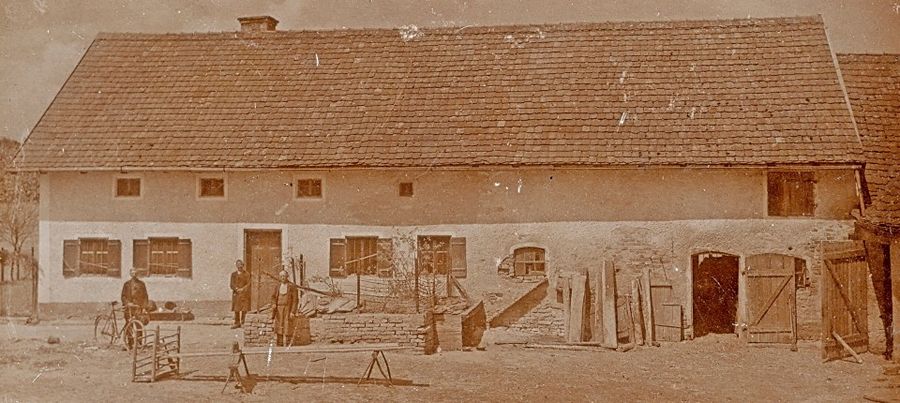
THE CLAIM
That six people were murdered one at a time with a farm mattock, that the killer then lived at the farmstead for several days among the bodies (eating their food, feeding their livestock, and keeping the fire lit) and that despite over a hundred suspects and more than a century of investigation, nobody has ever been identified.
THE THEORY, AS ITS PROPONENTS TELL IT
Six people were killed with a mattock on an isolated Bavarian farmstead on the night of 31 March 1922, four lured one at a time into the barn, the two-year-old and the newly arrived maid killed in the house. The theory that has held for a century is that the killer was known to the family and had been living on the property beforehand.
The preceding months supply the case. The previous maid left six months earlier saying the place was haunted. Keys to the house went missing. A newspaper appeared that nobody had bought. The family heard footsteps in the attic. And in the snow, Andreas Gruber found a set of footprints leading from the forest to the farm with none leading away: he told neighbours and did not tell the police.
The post-murder period is the strongest evidence and is corroborated independently. For several days afterwards neighbours saw smoke from the chimney. The livestock were fed and in good condition when the bodies were found on 4 April. Food in the kitchen had been eaten. Whoever killed the family stayed on the farm with the bodies and looked after the animals, behaviour that excludes a passing robber and points to someone with a reason to be there.
The motive theories run to the family's own history: a documented pattern of abuse within the household, and persistent local speculation about the paternity of the younger child. More than a hundred suspects were considered. In 2007 students at the Fürstenfeldbruck police academy re-examined the case and reported reaching a conclusion about the likely perpetrator, but withheld the name because relatives were still living. The victims' skulls, sent to Munich in 1922 for examination including by clairvoyants, were lost in the Second World War, taking with them any prospect of modern forensic work.
WHAT IS KNOWN
Hinterkaifeck was a small isolated farmstead. In the six months before the murders, the household reported a sequence of disturbances: the previous maid left, saying the place was haunted; keys to the house went missing; a newspaper appeared that nobody had bought; the family heard footsteps in the attic; and Andreas Gruber found a set of footprints in the snow leading from the forest to the farm, with no tracks leading back. He reported none of this to the police.
On the evening of 31 March 1922, four members of the household were lured one at a time into the barn and killed with a mattock. Inside the house, the two-year-old Josef was killed in his cot and the maid Maria Baumgartner, who had arrived that very day to take the vacant position, was killed in her room.
For the following days the farm showed signs of occupation. Neighbours saw smoke from the chimney. The livestock had been fed and were in good condition when found. Food in the kitchen had been eaten. Nobody in the surrounding area found this remarkable enough to investigate until 4 April, when neighbours came to the farm and discovered the bodies, four of them stacked in the barn under hay and a door.
The investigation was compromised from the start: neighbours moved through the property, and the bodies were examined on site. In a decision characteristic of the period, the victims' heads were removed and sent to Munich for examination, including by clairvoyants; the skulls were subsequently lost during the Second World War, taking with them any prospect of modern forensic analysis.
More than a hundred suspects were considered across the decades. Motives explored included robbery, though money was found in the house, and the family's difficult local reputation, including a documented history of abuse within the household and persistent local speculation about the paternity of the younger child. In 2007 students at the Fürstenfeldbruck police academy re-examined the case as a training exercise and reported reaching a conclusion as to the most likely perpetrator, but declined to publish the name because living relatives could be identified.
EVIDENCE FOR
- The pre-murder disturbances are contemporaneously reported and are difficult to explain as coincidence, someone was on the property before the killings.
- The footprints leading in with none leading out, if accurately observed, indicate someone who arrived and stayed.
- The post-murder occupation is corroborated by independent physical evidence: fed livestock, consumed food, and smoke observed by neighbours.
- The lure-and-kill sequence in the barn indicates familiarity with the farm's layout and routine.
EVIDENCE AGAINST
- The scene was contaminated before any trained investigator arrived, and the forensic material was subsequently destroyed in wartime.
- Much of the atmospheric detail (the footsteps, the unexplained newspaper) comes from statements given after the murders, when memory is heavily reshaped by the outcome.
- No suspect has ever been linked by physical evidence; the 2007 academy conclusion is an unpublished training exercise, not a finding.
- A century of retelling has attached folkloric elements to the case that are not in the original file.
ASSESSMENT
OPEN, permanently. Every avenue that modern forensics would use was closed by 1945, the skulls, the only substantial physical remains, were lost in the war. This office retains the file because of one detail that survives all the accretion and is corroborated by neighbours rather than by legend: the killer stayed. Whoever did this remained on an isolated farm for several days with six bodies, and looked after the animals. That is not the behaviour of a robber or a passing stranger, and it is the strongest surviving indication of who this person was.
WHAT WOULD CHANGE THE GRADE
- To CLOSED: realistically nothing. The farm was demolished in 1923, the skulls sent away for examination were lost during the Second World War, and every person involved is long dead.
- The contemporaneous facts are what make it: footprints leading to the farm and none leading away, the family reporting sounds in the attic in the days before, and the killer staying on afterwards to feed the cattle and eat in the kitchen.
- Bavarian police revisited it periodically into the 1980s, and a 2007 police academy exercise named a suspect but withheld the name out of consideration for living descendants. That is the last movement this file has had.
FURTHER READING
- Hinterkaifeck murders · Wikipedia
- Bavarian State Police case files, 1922 (partially digitised)
- Hinterkaifeck: Der Mordfall · Peter Leuschner, 1979
RELATED FILES IN THIS ARCHIVE
- OSA-084 · THE LEAD MASKS CASEOPEN CASELead masks, formal suits, and a schedule written in a notebook
- OSA-038 · THE ZODIAC KILLEROPEN CASEFive dead, two survivors, and ciphers mailed to the press
- OSA-039 · JACK THE RIPPEROPEN CASEWhitechapel, autumn 1888, the oldest file in the drawer
- OSA-046 · THE SOMERTON MANOPEN CASEA body on an Adelaide beach, a scrap of Persian poetry, an uncracked code