THE OKLAHOMA CITY BOMBING
| OCCURRED | 19 April 1995, Alfred P. Murrah Federal Building; 168 killed |
| CONVICTED | Timothy McVeigh, executed 2001; Terry Nichols, life; Michael Fortier, plea |
| DOCUMENTS | Over 3,000 pages disclosed by the FBI six days before McVeigh's scheduled execution |
| STATUS | Contested as to the full extent of involvement, not as to McVeigh's guilt |
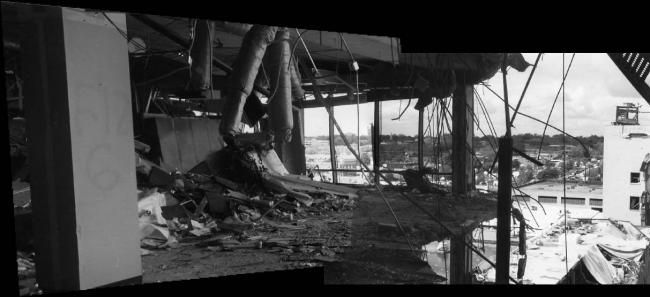
THE CLAIM
That more people were involved in the bombing than the three prosecuted, and that federal agencies had informants close to the plot and did not disclose what they knew.
THE THEORY, AS ITS PROPONENTS TELL IT
The proponents' case does not dispute McVeigh's guilt, which he admitted, and that is what distinguishes it from most of the assassination files in this cabinet.
In the days after the bombing the FBI sought two men. John Doe One was McVeigh. John Doe Two, described by witnesses at the truck rental agency and elsewhere, was never identified, and the Bureau eventually stated he did not exist and attributed the sightings to witness confusion with another customer. Multiple witnesses maintained their accounts.
The document disclosure is the strongest procedural point. Six days before McVeigh's scheduled execution in 2001, the FBI disclosed more than 3,000 pages of material that had not been given to the defence. The execution was postponed by a month. The Justice Department's inspector general later reviewed the failure and attributed it to systemic record-keeping problems rather than to concealment.
The wider argument concerns informants. Carol Howe, an ATF informant, had reported on the Elohim City compound in Oklahoma, which several of the bombing's peripheral figures visited. Her reporting and its handling have never been fully disclosed. Proponents argue this is a prior knowledge question of exactly the kind agencies have concealed before, and point to the pattern in OSA-009 and OSA-112 for why they consider the suspicion reasonable.
WHAT IS KNOWN
McVeigh was convicted and executed. He admitted the bombing, described it as retaliation for OSA-132 and OSA-133, and consistently maintained he acted with only the assistance charged.
Terry Nichols was convicted of conspiracy and involuntary manslaughter and is serving life. Michael Fortier pleaded guilty to failing to warn authorities and served time.
The 2001 document disclosure is a matter of record, as is the postponement of the execution.
A 2004 Oklahoma state grand jury examined the John Doe Two question and the wider conspiracy allegations and found insufficient evidence to charge anyone else, while noting the investigation had been imperfect.
Carol Howe was a real ATF informant reporting on Elohim City, and that is documented. What she reported and when has been only partially released.
EVIDENCE FOR
- Multiple witnesses describing a second man with McVeigh, several of whom never retracted.
- Over 3,000 pages of undisclosed material surfacing six days before an execution.
- A documented ATF informant reporting on a compound linked to peripheral figures, with the reporting only partly disclosed.
- A state grand jury that, while charging nobody, described the federal investigation as imperfect.
EVIDENCE AGAINST
- McVeigh, who had nothing left to lose and every incentive for notoriety, insisted to the end that the plot was as charged.
- The Justice Department inspector general examined the document failure and found systemic disorganisation rather than concealment, in an FBI records system that was notoriously bad.
- Thirty years of investigation by federal, state and journalistic parties has not identified John Doe Two, and eyewitness identification is the least reliable category of evidence in this archive, as OSA-118 also shows.
- The physical and forensic case against McVeigh and Nichols is overwhelming and independent of witness identification.
ASSESSMENT
Contested only at the edges, and this office states the edges precisely because the centre is not in doubt. McVeigh did it and said so. What has never been satisfactorily resolved is whether the conspiracy was larger, and the reasons for continued doubt are procedural rather than exotic: unretracted eyewitnesses, an unidentified second man the Bureau initially sought and then abandoned, an informant inside an adjacent milieu whose reporting remains partly sealed, and three thousand pages arriving six days before an execution. None of that establishes a wider plot. All of it is why the question stayed open.
WHAT WOULD CHANGE THE GRADE
- Not in doubt: McVeigh's guilt. He admitted it, the forensic case is overwhelming, and he insisted to the end that the plot was as charged.
- To CONFIRMED for a wider conspiracy: identification of John Doe Two. The FBI sought him, then concluded he did not exist, while several witnesses never retracted. Thirty years of investigation has not produced him.
- Still partly sealed: what ATF informant Carol Howe reported about Elohim City, and when. That reporting has been only partially released and is the strongest remaining thread.
- The 3,000-plus pages disclosed six days before the execution were reviewed by the Justice Department inspector general, who attributed the failure to systemic record-keeping rather than concealment.
FURTHER READING
- Oklahoma City Bombing — FBIfbi.gov
- FBI — Oklahoma City Bombingfbi.gov, archived
- The Oklahoma City Bombing: 20 Years Later — FBIfbi.gov
- Oklahoma City bombing · Wikipedia
- Office of the Inspector General, US Department of Justice, review of the FBI's disclosure failures in the McVeigh case (2002)
- Oklahoma County grand jury report (2004)
RELATED FILES IN THIS ARCHIVE
- OSA-063 · THE GLEIWITZ INCIDENTCONFIRMEDThe staged attack that opened the Second World War
- OSA-012 · THE GULF OF TONKIN INCIDENTCONFIRMEDThe attack that launched a war didn't happen
- OSA-162 · THE IRAQ WMD CASECONFIRMEDA war argued on intelligence that four inquiries found unsupportable
- OSA-004 · OPERATION NORTHWOODSCONFIRMEDThe false-flag plan the Joint Chiefs actually signed