THE ROSENBERG CASE
| EXECUTED | Julius and Ethel Rosenberg, 19 June 1953 |
| KEY WITNESS | David Greenglass, Ethel's brother, who received a reduced sentence |
| LATER EVIDENCE | Venona decrypts released 1995; Soviet archival material; Greenglass recanted 2001 |
| STATUS | Contested. Julius's espionage largely confirmed; Ethel's conviction discredited |
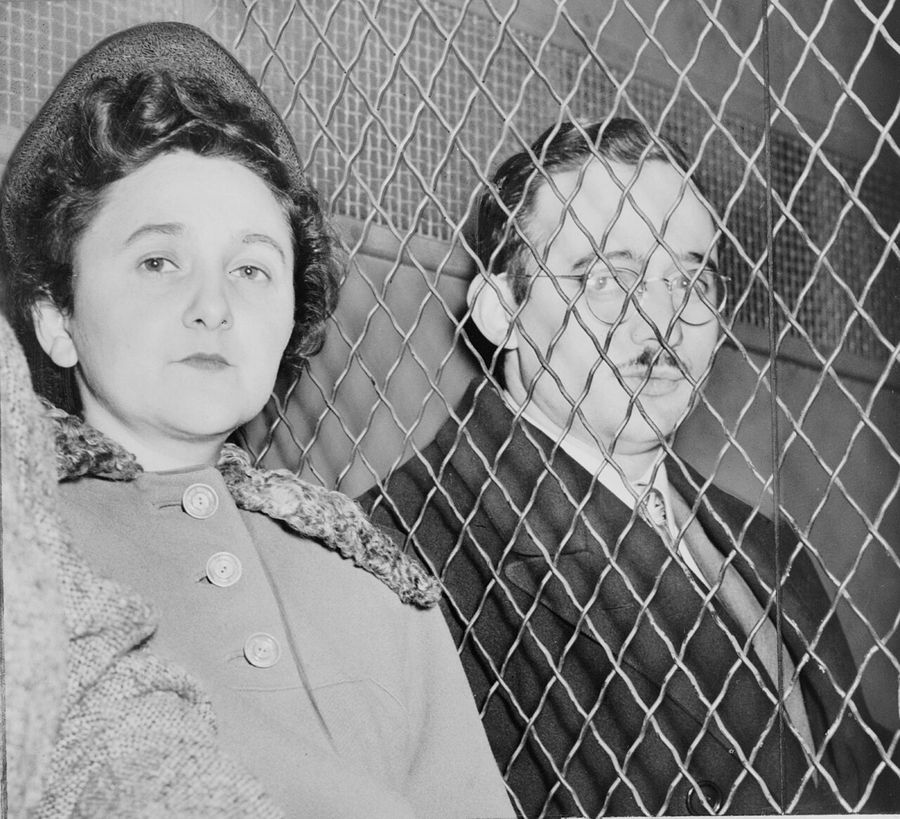
THE CLAIM
That the Rosenbergs were executed after a trial in which the government knowingly used false testimony against Ethel Rosenberg in order to pressure her husband, and that the sentences were political.
THE THEORY, AS ITS PROPONENTS TELL IT
This file has moved substantially in both directions since 1953, which is why it is graded contested rather than either way.
The Venona decrypts, released in 1995, are Soviet cables read by American cryptanalysts. They confirm that Julius Rosenberg ran a Soviet espionage network under the cover name Liberal, recruiting engineers and passing military and industrial material. That part of the case has been strengthened, not weakened, by everything released since.
Ethel is the opposite. Venona contains no cover name for her and indicates she knew of her husband's work but was not an agent. Her conviction rested largely on testimony from her brother David Greenglass that she had typed up notes. In 2001 Greenglass told a journalist that he had given that testimony to protect his own wife and that he did not actually remember it, and that he had been told what to say.
The argument proponents make is about the use of the death sentence. Grand jury testimony released in 2008 confirmed that Greenglass had not, before the trial, said what he said at trial. Prosecutors including Roy Cohn later stated openly that Ethel was indicted to give them leverage over Julius. She did not break, and she was executed.
WHAT IS KNOWN
Julius Rosenberg's espionage is now established by multiple independent sources, including Venona, post-Soviet archival material, and the accounts of his handler Alexander Feklisov.
The specific value of what was passed on nuclear weapons is disputed among historians. Greenglass was a machinist, not a physicist, and the material he supplied was rudimentary. Klaus Fuchs, a physicist, was the far more damaging source and served nine years.
Greenglass received fifteen years and served ten. His wife Ruth, who by his later account was the one who actually did the typing, was never charged.
The 2008 release of grand jury testimony confirmed the material discrepancy between what Greenglass said before trial and what he said at it. The Rosenbergs' sons have campaigned since for a formal exoneration of their mother.
EVIDENCE FOR
- Greenglass's own recantation, on the record, of the testimony that convicted his sister.
- Grand jury testimony released in 2008 showing he had said something materially different before trial.
- Venona's failure to identify Ethel as an agent, in a source that identifies her husband clearly.
- Prosecutors' own later statements that Ethel was charged as leverage.
EVIDENCE AGAINST (THE INNOCENCE CLAIM)
- Julius Rosenberg was guilty of espionage. The claim that both were framed is not supportable and has not been for thirty years.
- Ethel was aware of her husband's activity, on the evidence of the same decrypts that exonerate her of being an agent, which is not the same as innocence of everything.
- The trial was conducted under the law of the time, and the appellate courts, including the Supreme Court, declined to intervene.
ASSESSMENT
Contested, and one of the few files in this cabinet where the passage of time has convicted one party and exonerated the other. Julius Rosenberg spied; that is settled and the people who insisted otherwise for forty years were wrong. Ethel Rosenberg was convicted on testimony her own brother later said he invented under pressure, indicted by prosecutors who have said publicly she was leverage, and executed when the leverage failed. This archive grades evidence rather than politics, and the evidence on those two propositions now points in opposite directions.
WHAT WOULD CHANGE THE GRADE
- Settled against the defence: Julius Rosenberg ran a Soviet network, established by the Venona decrypts released in 1995, by post-Soviet archival material, and by his handler's own account.
- Settled against the prosecution: the case against Ethel rested on testimony her brother told a journalist in 2001 he had invented, and grand jury material released in 2008 showed he had said something materially different before trial.
- To CLOSED: a formal review of Ethel's conviction. Her sons have campaigned for exoneration, and no court has revisited it.
FURTHER READING
- FBI Records Vault: rosenberg-casevault.fbi.gov
- FBI Records Vault: Venonavault.fbi.gov
- Julius and Ethel Rosenberg · Wikipedia
- The Venona project · the decrypts, released 1995
- Sam Roberts, The Brother (2001) · containing Greenglass's recantation
RELATED FILES IN THIS ARCHIVE
- OSA-059 · PROJECT AZORIANCONFIRMEDThe CIA stole a Soviet submarine off the ocean floor
- OSA-060 · ACOUSTIC KITTYCONFIRMEDThe CIA wired a live cat for sound
- OSA-065 · OPERATION IVY BELLSCONFIRMEDA recording pod clamped to a Soviet cable, 400 feet down
- OSA-114 · CRYPTO AGCONFIRMEDHalf a century reading the secret traffic of allies and adversaries alike