THE TYLENOL MURDERS
| DATE | 29 September – 1 October 1982 |
| LOCATION | Chicago metropolitan area: Elk Grove Village, Arlington Heights, Winfield, Chicago |
| CASUALTIES | 7 dead from potassium cyanide in Extra Strength Tylenol capsules |
| STATUS | Unsolved. No one has ever been charged with the murders |
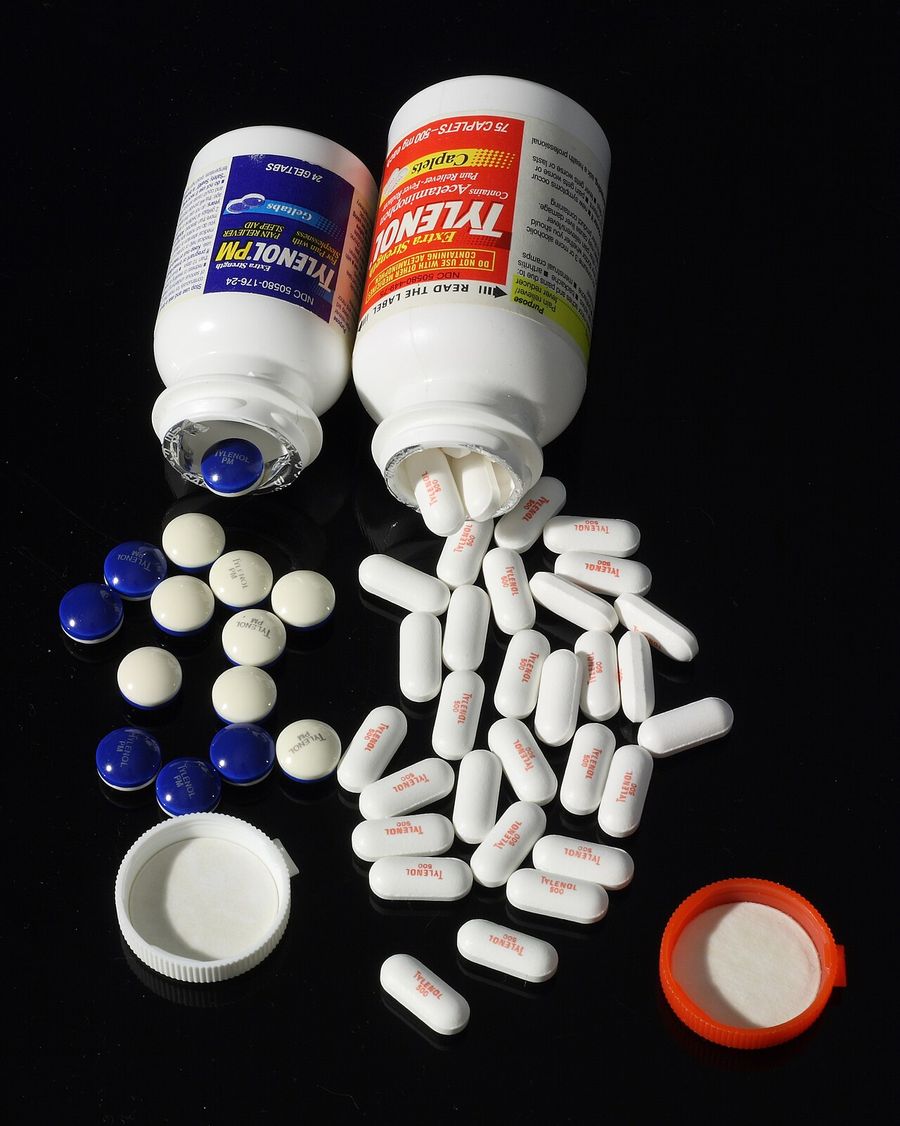
THE CLAIM
That someone bought bottles of Tylenol from Chicago-area shops, replaced the powder in the capsules with potassium cyanide, returned the bottles to the shelves, and walked away, and that despite one of the largest homicide investigations in American history, the person has never been identified.
THE THEORY, AS ITS PROPONENTS TELL IT
The theory that has occupied investigators for forty-four years is that James William Lewis, who sent Johnson & Johnson a letter demanding a million dollars to "stop the killing," was the poisoner, and the theory that has occupied everyone else is that this cannot be right, because he was in New York.
The case against Lewis: the extortion letter is real, he was convicted for it and served roughly twelve years, he had a documented history of violence and disturbing conduct, and investigators returned to him repeatedly across decades, searching his home again in 2009 and obtaining DNA. Law enforcement has continued to describe him as the prime suspect, and in the period around his death in 2023 several investigators indicated they regarded the case as effectively solved without ever charging him.
The case against that case: no one could place him in the Chicago area in the relevant window, and he denied the murders consistently for forty years while freely admitting the extortion. Opportunistic extortion following a publicised mass poisoning is a well-documented crime pattern that requires no involvement in the killing.
A separate strand, argued most fully in Scott Bartz's Tylenol Mafia, holds that the tampering occurred somewhere in the distribution chain rather than on retail shelves, and that this possibility was closed off early because the alternative was commercially catastrophic for the manufacturer and the retail explanation was more convenient for everyone. This office notes that the retail-cluster evidence is genuinely strong, and that the distribution theory has never accounted for it.
WHAT IS KNOWN
On the morning of 29 September 1982, twelve-year-old Mary Kellerman of Elk Grove Village took a capsule for a sore throat and died. Within two days, six more people were dead across the Chicago area. Among them were Adam Janus, and then, after gathering at his home to grieve, his brother Stanley and Stanley's wife Theresa, who took capsules from the same bottle. Two off-duty firefighters comparing notes on the calls made the connection to Tylenol, and the city was warned by loudspeaker and broadcast within hours.
The capsules contained potassium cyanide at doses many times lethal. Investigators established that the tampering had occurred after the products left the factory: the affected bottles traced to different manufacturing lots and different plants but to a tight cluster of retail locations, which excluded contamination in production and pointed to someone working the shelves.
Johnson & Johnson recalled roughly 31 million bottles at a cost of over $100 million and halted production and advertising. The response is still taught in business schools as the model for crisis management, and the company reintroduced the product in triple-sealed packaging.
The lasting consequence was regulatory. The Food and Drug Administration issued tamper-resistant packaging rules in 1982, Congress passed the Federal Anti-Tampering Act in 1983 making product tampering a federal crime, and the industry moved away from the easily opened gelatin capsule toward the solid caplet. Every foil seal, shrink band, and blister pack in a modern pharmacy descends from this case.
James William Lewis sent Johnson & Johnson a letter demanding $1 million to "stop the killing." He was convicted of extortion and served roughly twelve years, but always denied the poisonings, and investigators were never able to place him in Chicago at the relevant time. The case has been reopened repeatedly, including DNA testing and searches of Lewis's home in 2009, and law enforcement has continued to describe him as the leading suspect. He died in July 2023 without ever being charged with the murders.
EVIDENCE FOR
- The physical evidence is unambiguous as to method: post-production tampering, at retail, by hand.
- The retail cluster narrows the geography sharply, the poisoner shopped a small number of stores in a small area.
- James Lewis's extortion letter is a documented fact, as is his conviction for it, and investigators have never developed a stronger candidate.
EVIDENCE AGAINST (THE LEADING SUSPECT)
- Lewis was living in New York City at the time and investigators could never place him in Chicago; the extortion is proven, the murders are not.
- Extortion after a publicised mass poisoning is a well-known opportunistic crime pattern and does not require the extortionist to be the killer.
- Decades of DNA and forensic re-examination, including modern testing, have failed to produce a match.
- The copycat wave that followed in 1982–86 muddied the evidentiary field considerably.
ASSESSMENT
OPEN, and likely to stay open. This office notes the strange asymmetry of the file: the case failed completely as a prosecution and succeeded completely as a policy intervention. Nobody was ever charged, and yet the killer permanently changed how every consumer product on Earth is packaged. Note also the mechanism that broke it open, two firefighters on unrelated calls comparing notes over a radio. That is the same shape as the Watergate file: real conspiracies and real crimes are usually detected by an ordinary person noticing an inconsistency, not by an institution.
WHAT WOULD CHANGE THE GRADE
- To CLOSED: a DNA or fingerprint match from the recovered bottles and packaging. The evidence was re-examined with modern methods around 2009 and 2010, and no charge followed.
- James Lewis, who sent the extortion letter and served time for that, was never charged with the murders and died in 2023. His death removed the last realistic route to an admission.
- What is established is that the tampering happened on the shelf rather than at the factory. This is the case that produced tamper-evident packaging worldwide, which means it changed daily life for everyone without ever being solved.
FURTHER READING
- SEC Charges Johnson & Johnson With Foreign Briberysec.gov
- Chicago Tylenol murders · Wikipedia
- Federal Anti-Tampering Act · Wikipedia
- Tylenol Mafia · Scott Bartz, 2011 (a dissenting account of the investigation)
RELATED FILES IN THIS ARCHIVE
- OSA-038 · THE ZODIAC KILLEROPEN CASEFive dead, two survivors, and ciphers mailed to the press
- OSA-039 · JACK THE RIPPEROPEN CASEWhitechapel, autumn 1888, the oldest file in the drawer
- OSA-046 · THE SOMERTON MANOPEN CASEA body on an Adelaide beach, a scrap of Persian poetry, an uncracked code
- OSA-082 · THE ISDAL WOMANOPEN CASENine aliases, a coded diary, and no name at all