THE ALCATRAZ ESCAPE
| ESCAPED | Frank Morris and brothers John and Clarence Anglin, night of 11 June 1962 |
| METHOD | Widened vents dug with improvised tools, dummy heads, a raft of stitched raincoats |
| FBI | Closed its investigation in 1979, concluding the men most likely drowned |
| STATUS | Open. The US Marshals Service maintains active warrants |
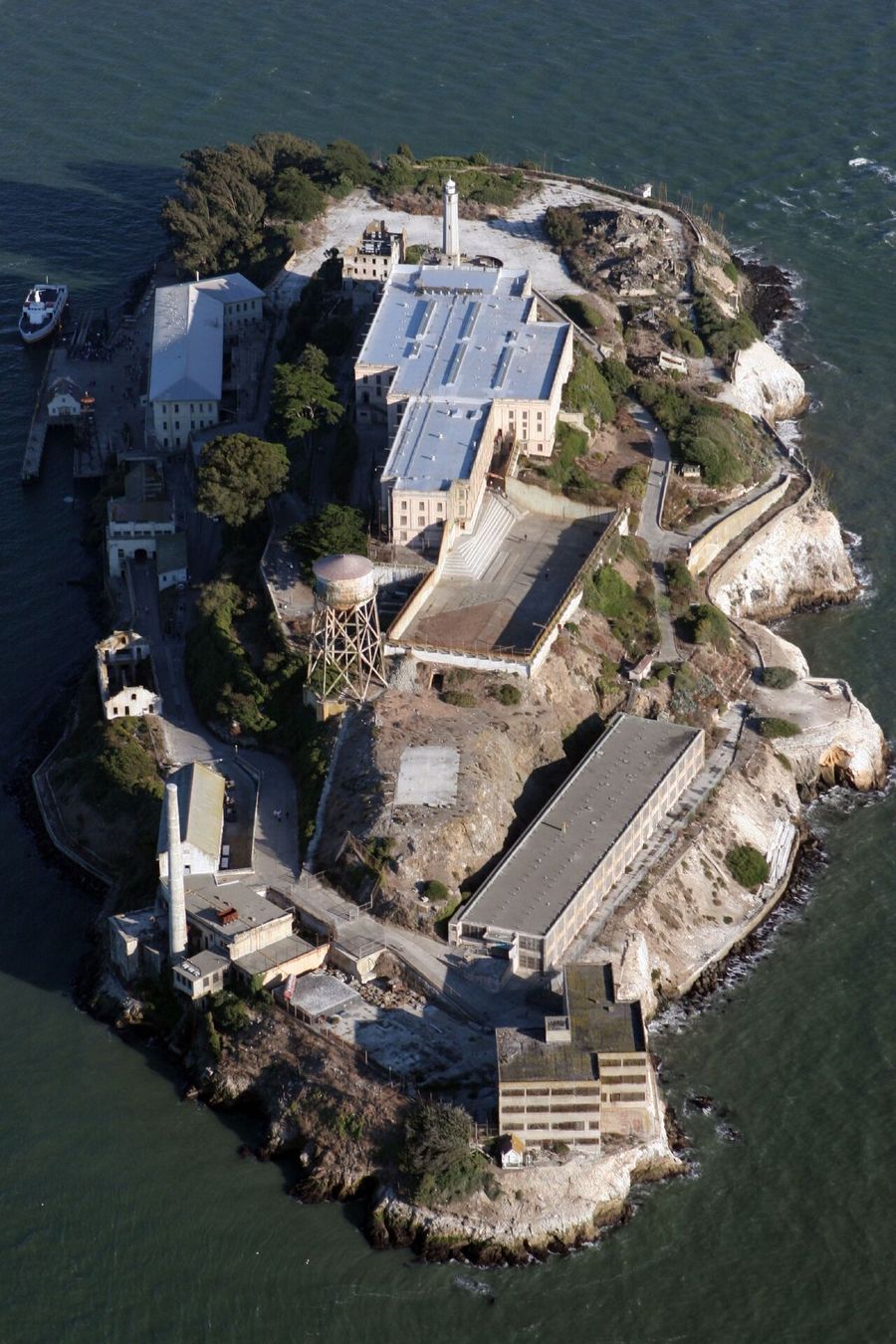
THE CLAIM
That the three men who escaped Alcatraz in 1962 survived, and that the official conclusion that they drowned was reached without evidence.
THE THEORY, AS ITS PROPONENTS TELL IT
The escape itself is not in question and is remarkable. The dispute is entirely about what happened after they entered the water.
Over months the men widened the ventilation ducts at the back of their cells using sharpened spoons and a stolen drill motor, concealing the holes with painted cardboard. They built dummy heads from soap, toilet paper and real hair from the prison barbershop, left them in their beds, and climbed to the roof. They inflated a raft made from more than fifty stolen raincoats, stitched and sealed, using a concertina as a bellows.
The official conclusion is that they drowned in the bay's cold water and strong currents. No body was ever recovered, which the FBI attributed to the currents carrying them out to sea.
The survival case rests on several items. A 2015 Dutch hydraulic study modelled the tides and found that if they launched around midnight, the currents would have carried them toward Angel Island rather than out to sea. Family members have reported contacts. In 2018 a letter purportedly from John Anglin, claiming all three survived, was made public by police; its handwriting analysis was inconclusive.
WHAT IS KNOWN
The escape happened as described. The dummy heads are in the Alcatraz museum.
Items were recovered in the bay in the days after, including a paddle, a wallet wrapped in plastic containing contacts for the Anglins' relatives, and a deflated life vest.
The Anglin family has maintained for decades that the brothers survived, and produced a photograph purporting to show them in Brazil in 1975. Forensic examination of that photograph has been contested and is not conclusive.
The US Marshals Service keeps the case open with active warrants, on the basis that no bodies were recovered, and has said it will pursue it until the men would be over 100 years old.
EVIDENCE FOR
- No bodies were ever recovered, in a bay where drowning victims are usually found.
- Hydraulic modelling indicating that a midnight launch would have reached land.
- The US Marshals Service's decision to keep active warrants rather than accept the drowning conclusion.
- Family accounts and a disputed 1975 photograph.
EVIDENCE AGAINST
- The water was around 10 degrees Celsius, and hypothermia would set in quickly for men on a raincoat raft.
- The recovered wallet with family contacts, floating in the bay, suggests the raft failed.
- None of the three ever surfaced in any verifiable way in sixty-three years, despite the Anglins having a close family who would likely have known.
- The 2018 letter's provenance is unestablished and its handwriting analysis inconclusive, which means it supports nothing either way.
ASSESSMENT
Open, and reasonably so. This office notes that open here means genuinely undetermined rather than suspicious: there is no cover-up in this file and no institution behaving badly, only three men who went into cold water on a homemade raft and were never accounted for either way. The absence of bodies is the whole case, and the drift modelling makes survival physically possible rather than probable. The Marshals Service keeping warrants open is the correct posture and this archive adopts the same one.
WHAT WOULD CHANGE THE GRADE
- Open in the genuine sense: no cover-up, no institution behaving badly, just three men who entered cold water on a homemade raft and were never accounted for either way.
- The whole case rests on one fact: no body was ever recovered, in a bay where drowning victims usually are. A 2015 hydraulic study found that a midnight launch would have carried them toward land rather than out to sea, which makes survival physically possible rather than probable.
- Against it: 10 degree water, and a recovered wallet containing family contacts floating in the bay, which suggests the raft failed. The 2018 letter has unestablished provenance and inconclusive handwriting analysis, so it supports nothing either way.
FURTHER READING
- 50 years later, new evidence suggests 3 Alcatraz escapees may still be alivepix11.com, archived
- FBI Records Vault: Alcatraz Escapevault.fbi.gov
- June 1962 Alcatraz escape · Wikipedia
- Delft University of Technology, hydraulic modelling of the 1962 escape (2015)
- FBI case file on the Alcatraz escape, released records
RELATED FILES IN THIS ARCHIVE
- OSA-085 · THE MARY CELESTEOPEN CASESound, stocked, sailing herself, and empty
- OSA-093 · THE FLANNAN ISLES LIGHTHOUSEOPEN CASETwo sets of oilskins gone, one still on the hook
- OSA-008 · DYATLOV PASSCONTESTEDNine hikers, a tent cut open from inside
- OSA-080 · THE TITANIC SWITCHDEBUNKEDThe insurance scam undone by a hull number