THE MARY CELESTE
| DATE | Departed New York 7 November 1872; found abandoned 4 December 1872 |
| LOCATION | Atlantic Ocean between the Azores and Portugal |
| MISSING | Captain Benjamin Briggs, his wife Sarah, daughter Sophia (2), and seven crew |
| STATUS | Unresolved. No occupant, and no lifeboat, was ever found |
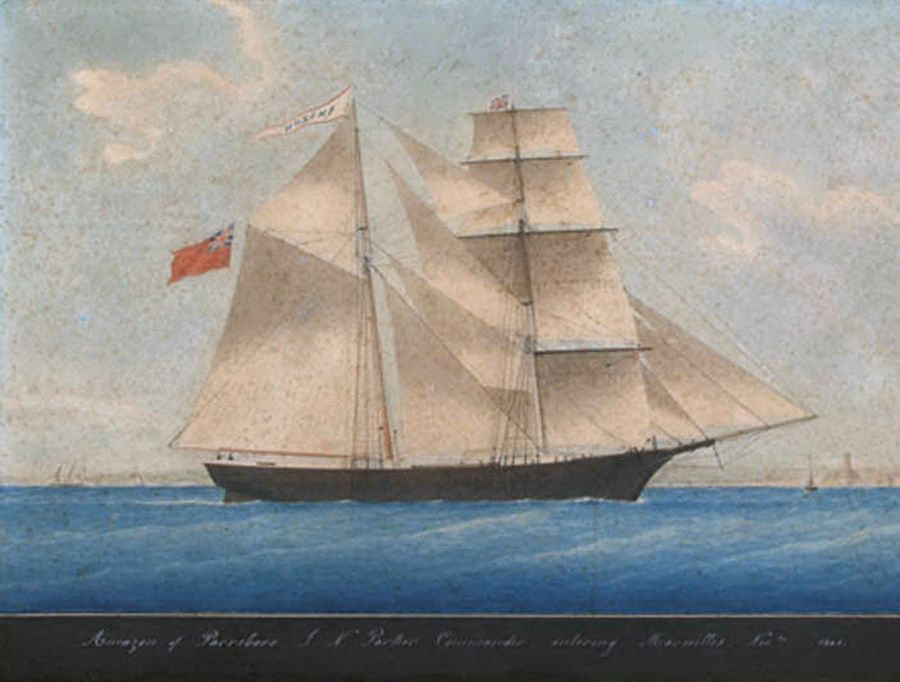
THE CLAIM
That ten people abandoned a sound, provisioned ship in the middle of the Atlantic for reasons that have never been established, and that every subsequent explanation, from piracy to insurance fraud to mutiny to sea monster, has failed to account for the specific condition in which she was found.
THE THEORY, AS ITS PROPONENTS TELL IT
The Mary Celeste was found seaworthy, provisioned, and empty in December 1872, and the theory that has done the most damage to the case is the one advanced at the official inquiry.
Frederick Solly-Flood, the Gibraltar attorney general, pursued a conspiracy reading: that the crew had broached the alcohol cargo, murdered Captain Briggs and his family, and fled, or alternatively that Briggs and Captain Morehouse of the salvaging Dei Gratia had colluded in a fraud, with the ship deliberately abandoned to be recovered for salvage money by a friend. He produced stains he asserted were blood and a sword he asserted was the weapon; analysis supported neither. The proceedings dragged for months, the salvage award was reduced, and the suspicion attached to the ship for the rest of her working life.
The exotic theories arrived later and have largely been the property of fiction: piracy, a giant squid, waterspouts, seaquakes, and abduction. Almost every detail that makes those readings feel compelling (the meal still warm on the table, the tidy cabins, the cat asleep on a bunk) was invented by Arthur Conan Doyle in an 1884 short story that also misnamed the ship "Marie Celeste," an error that has outlived every correction since.
The explanation that best fits the actual evidence is undramatic. Nine of the 1,701 alcohol barrels were of porous red oak and were found empty. Vapour venting in the hold, or a brief flash on opening it, would have suggested imminent explosion. Briggs, with his wife and two-year-old daughter aboard, evacuates to the yawl, keeps it attached by the rope found trailing from the stern, and waits. The line parts. The ship sails on without them.
WHAT IS KNOWN
The Mary Celeste sailed from New York on 7 November 1872 for Genoa, carrying 1,701 barrels of denatured alcohol. Aboard were Captain Benjamin Briggs (an experienced, temperate, well-regarded master) his wife, their two-year-old daughter, and seven crew.
On 4 December the Canadian brigantine Dei Gratia sighted her yawing under partial sail some 400 miles east of the Azores. A boarding party found no one aboard. The ship was damp below but sound and in no danger of sinking. She had six months of provisions and ample fresh water. The crew's personal effects and oilskins were largely in place.
What was missing was specific and telling: the single lifeboat, the ship's register and papers, the sextant and chronometer, and the captain's navigational instruments. A rope was found trailing from the stern. The log slate's last entry was dated 25 November, placing her near Santa Maria Island, meaning she had sailed several hundred miles unmanned. Of the alcohol barrels, nine were later found empty; they were made of red oak, which is more porous than the white oak used for the rest.
At the Gibraltar salvage hearing, the attorney general Frederick Solly-Flood pursued a theory of foul play (mutiny, murder, or a fraud conspiracy between Briggs and the Dei Gratia's master) and delayed proceedings for months. He proved none of it. Salvage was awarded, but at a fraction of the cargo's value, an implicit rebuke.
The modern consensus explanation is the alcohol. Vapour escaping the nine porous barrels, possibly ignited into a brief flash by rising temperature or vented alarmingly on opening the hold, would have suggested imminent explosion. Briggs, with his wife and infant daughter aboard, orders everyone into the yawl, keeping it attached by that stern rope while the danger passes. The line parts in a squall. The ship sails on. The boat does not.
The story's grip on the public owes much to Arthur Conan Doyle, whose 1884 story "J. Habakuk Jephson's Statement" added invented details (untouched meals, a still-warm stove) and misnamed the ship "Marie Celeste," an error that has outlived every correction.
EVIDENCE FOR
- The condition of the vessel is documented in sworn salvage testimony rather than legend: sound, provisioned, and abandoned.
- The missing items form a coherent set (lifeboat, papers, navigational instruments) indicating a deliberate, orderly evacuation by a competent master, not panic or violence.
- The trailing stern rope is consistent with a boat kept in tow rather than cut loose.
- Nine empty red-oak barrels out of 1,701 supply a specific, physical trigger for exactly this kind of precautionary abandonment.
EVIDENCE AGAINST
- No trace of the yawl or of any occupant has ever been found, which the towing theory requires but cannot demonstrate.
- Abandoning a sound ship in mid-Atlantic for a fume risk was an extreme decision for an experienced master, and the alcohol theory rests on inferring his state of mind.
- Solly-Flood found no blood, no damage, and no sign of struggle, which weakens mutiny and piracy but also removes any positive evidence for any theory.
- Vast amounts of the popularly known detail, the warm meals, the tidy cabins, the cat asleep on a bunk, are Conan Doyle's fiction and have contaminated the factual record for 140 years.
ASSESSMENT
OPEN, though this office regards the alcohol-vapour abandonment as substantially the best explanation and would grade it higher if the yawl had ever been found. The file is retained chiefly as a case study in narrative contamination. Almost everything the general public knows about the Mary Celeste, including the ship's name, comes from a short story published twelve years after the event by a young doctor who would later invent Sherlock Holmes. When you encounter a mystery whose most famous details all point the same evocative direction, check whether a novelist got there first.
WHAT WOULD CHANGE THE GRADE
- To CLOSED: nothing. The ship was found in December 1872 seaworthy, under partial sail, with the crew's belongings aboard and the single lifeboat missing.
- The strongest reading is an orderly abandonment that went wrong. The cargo was 1,701 barrels of denatured alcohol, nine of which were found empty, and fumes venting in the Azores heat would explain evacuating to a boat that was then lost from the ship.
- Almost everything people remember about this case is fiction. The still-warm meals and untouched breakfast come from Arthur Conan Doyle's 1884 short story, not from the salvage record, and separating the two is most of the work.
FURTHER READING
- Mary Celeste · Wikipedia
- The Ghost of the Mary Celeste · Valerie Martin, 2014
- "J. Habakuk Jephson's Statement" · Arthur Conan Doyle, Cornhill Magazine, 1884 (the source of the myth)
RELATED FILES IN THIS ARCHIVE
- OSA-093 · THE FLANNAN ISLES LIGHTHOUSEOPEN CASETwo sets of oilskins gone, one still on the hook
- OSA-185 · THE ALCATRAZ ESCAPEOPEN CASEThree men left the island and were never found, alive or dead
- OSA-080 · THE TITANIC SWITCHDEBUNKEDThe insurance scam undone by a hull number
- OSA-131 · THE USS MAINECONTESTED266 dead, a war three months later, and no agreed cause in 128 years