THE BLACK DAHLIA
| DATE | Body discovered 15 January 1947 |
| LOCATION | Vacant lot on South Norton Avenue, Leimert Park, Los Angeles |
| VICTIM | Elizabeth Short, 22 |
| STATUS | Unsolved. No charge ever brought |
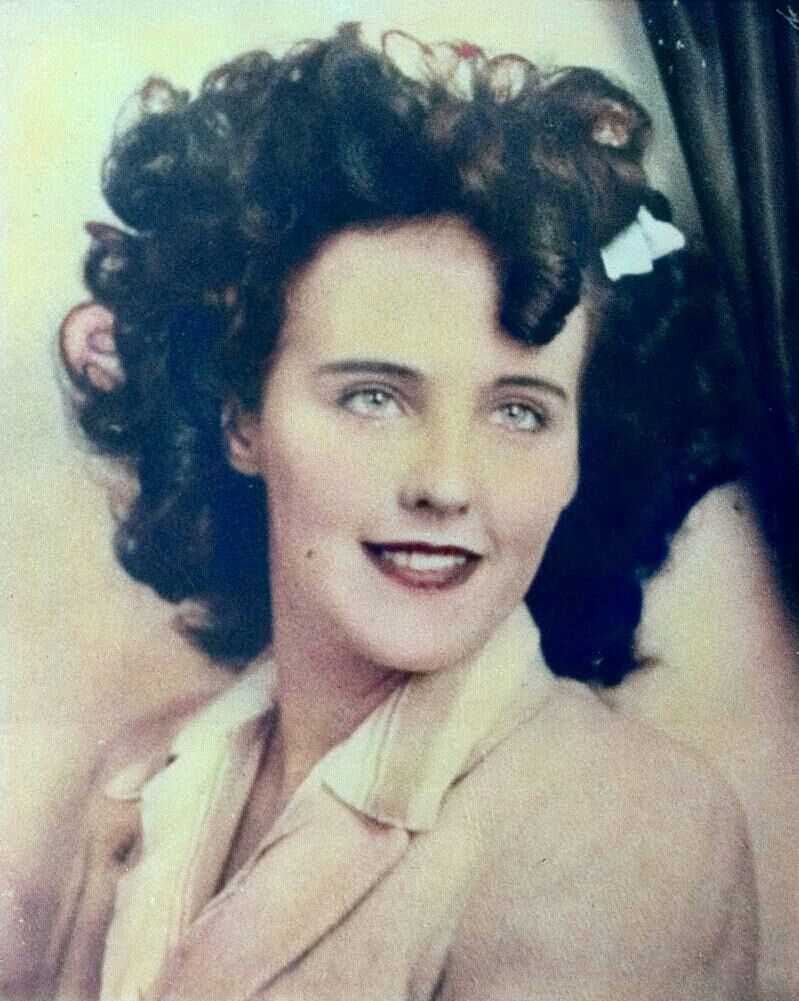
THE CLAIM
That the person who killed Elizabeth Short possessed surgical or mortuary training, that the LAPD identified him at the time, and that the investigation was compromised, by press interference, by the sheer volume of false confessions, or, in the strongest version, by the suspect's professional and social standing.
THE THEORY, AS ITS PROPONENTS TELL IT
The physical evidence in the Elizabeth Short murder imposes a constraint that every theory has had to satisfy: the body was bisected through the lumbar spine at the one point where it separates without cutting bone, drained of blood, washed, and moved to the vacant lot where it was displayed. Pathologists in 1947 concluded the killer had anatomical training and a private location with running water.
The George Hodel theory is the most developed, and its unusual feature is its author, the suspect's own son, a retired LAPD homicide detective. It draws on District Attorney surveillance files released decades later showing that Hodel, a Los Angeles physician, was bugged in 1950 in connection with the case, and that a recording captured him saying words to the effect that supposing he did kill the Black Dahlia, they could not prove it now. Hodel had been tried and acquitted of incest, kept a circle that included Man Ray, and left the country.
The suppression strand holds that the investigation was compromised from within: that the DA's office had enough on Hodel to act and did not, and that police corruption in 1940s Los Angeles, extensively documented independently of this case, protected a professional man with connections.
The competing explanation for the failure is not conspiracy but chaos. Reporters reached witnesses before detectives, the Examiner took possession of the victim's effects, and roughly sixty people confessed falsely, consuming the investigation's capacity. This office regards the second as better supported, and notes that both readings agree the case was lost in 1947 rather than in the decades since.
WHAT IS KNOWN
On the morning of 15 January 1947 a woman walking with her daughter in Leimert Park saw what she took to be a discarded mannequin in a vacant lot. It was the body of Elizabeth Short, 22, severed cleanly at the waist, drained of blood, washed, and posed with the two halves arranged and the arms positioned above the head. Her face had been cut from the corners of the mouth toward the ears. There was no blood at the scene: she had been killed elsewhere and moved.
The bisection was a hemicorporectomy performed through the lumbar spine between vertebrae, separating the body at the one point where it can be divided without cutting bone. Pathologists at the time regarded this as indicating anatomical knowledge, a surgeon, a medical student, or a mortician.
The press named her the Black Dahlia and covered the case with an aggression that actively damaged the investigation. Reporters reached witnesses first, and in one instance the Los Angeles Examiner obtained her personal effects. Nine days after the discovery, a package was mailed to the Examiner containing her birth certificate, photographs, and an address book with a page torn out, cleaned with petrol to remove fingerprints, accompanied by a note assembled from pasted newsprint letters.
The LAPD interviewed around 150 suspects. Roughly sixty people confessed, essentially all of them demonstrably false, a volume that consumed the investigation's resources and is now a standard illustration of the false-confession problem in high-publicity cases.
The most persistent named suspect is Dr George Hodel, a Los Angeles physician, advanced by his son, the retired LAPD detective Steve Hodel. District Attorney files released decades later show Hodel was under electronic surveillance in 1950 in connection with the case, and a recording captured him saying words to the effect of "supposin' I did kill the Black Dahlia: they can't prove it now." He left the country and was never charged. Other candidates advanced over the years include Walter Bayley, Leslie Dillon, and Jack Anderson Wilson.
EVIDENCE FOR
- The surgical quality of the bisection genuinely narrows the offender pool to people with anatomical training, this is a physical constraint, not speculation.
- The DA's own surveillance files on George Hodel exist and were released; the recorded remark is in the record.
- The mailed package establishes that the killer engaged with the press directly and had handled her possessions.
- The body was washed and moved, indicating a private location with plumbing and unhurried access, again a narrowing constraint.
EVIDENCE AGAINST
- No forensic evidence has ever connected any named suspect to the body; the surviving physical evidence was degraded or lost over decades of handling.
- Hodel's recorded remark is ambiguous and was made under police pressure; the DA's office had it in 1950 and did not charge him.
- The son-of-the-suspect authorship of the leading theory is a structural weakness: it is advanced by an interested party who has also attributed other unsolved murders to the same man.
- The sixty false confessions demonstrate how strongly this case attracts fabrication, which should discount all late-arriving accounts including some of the suspect material.
ASSESSMENT
OPEN, and functionally closed by time, any offender would now be well past a century old. This office retains the file for a specific reason: it is the archive's best documented case of the press actively destroying an investigation in real time. Reporters reached witnesses before detectives, took possession of evidence, and generated a publicity environment that produced sixty false confessions the LAPD then had to work through. When you read that an investigation "was bungled" or "must have been covered up," this file is the reminder that the ordinary explanation is often chaos rather than conspiracy.
WHAT WOULD CHANGE THE GRADE
- To CLOSED: physical evidence, of which almost none survives. The LAPD file has passed through so many hands over so many decades that the chain of custody cannot be reconstructed.
- The one solid forensic inference is that the bisection was a hemicorporectomy, a recognised surgical procedure, which points to medical training and narrows the field without naming anyone.
- The leading suspect theory is advanced by George Hodel's own son, a former LAPD detective, which is a structural weakness whatever its merits: the theory's author is an interested party. Roughly sixty false confessions polluted the record from the first weeks.
FURTHER READING
- BLACK DAHLIA MURDERsouthpasadenan.com, archived
- Anatomy of a Podcast: Root of Evil: The True Story of the Hodel Family and the Blackstevehodel.com, archived
- Does this old letter finally solve the mystery of the Black Dahlia?sfgate.com, archived
- Black Dahlia · Wikipedia
- Black Dahlia Avenger · Steve Hodel, 2003 (the leading suspect theory, by an interested party)
- Severed: The True Story of the Black Dahlia Murder · John Gilmore, 1994
RELATED FILES IN THIS ARCHIVE
- OSA-038 · THE ZODIAC KILLEROPEN CASEFive dead, two survivors, and ciphers mailed to the press
- OSA-039 · JACK THE RIPPEROPEN CASEWhitechapel, autumn 1888, the oldest file in the drawer
- OSA-046 · THE SOMERTON MANOPEN CASEA body on an Adelaide beach, a scrap of Persian poetry, an uncracked code
- OSA-081 · THE TYLENOL MURDERSOPEN CASESeven dead, no charges, and the reason every bottle is sealed