THE CLEVELAND TORSO MURDERS
| OCCURRED | 1935 to 1938, Cleveland, Ohio, centred on the Kingsbury Run area |
| VICTIMS | Twelve officially; only two ever identified |
| METHOD | Decapitation, often while the victim was alive, followed by dismemberment |
| STATUS | Open. No charge was ever brought |
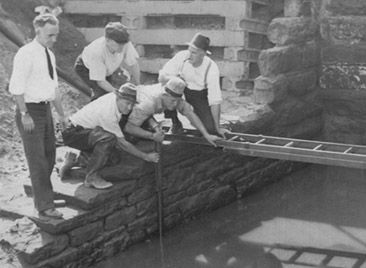
THE CLAIM
That a serial killer operated in Cleveland in the 1930s, that the victims were chosen for their anonymity, and that the investigation was compromised by the safety director's own actions.
THE THEORY, AS ITS PROPONENTS TELL IT
The pattern is clear and the investigation's failure is documented, which is what puts this beyond an ordinary cold case.
Between 1935 and 1938 at least twelve people were killed, decapitated and dismembered, with remains left in the Kingsbury Run area. The coroner determined that decapitation was frequently the cause of death rather than post-mortem, which requires restraint and some anatomical skill.
The victims were chosen for anonymity. Most were transients from the shantytowns of the Depression, and only two were ever identified. That selection is itself the clearest evidence of deliberate method.
Eliot Ness, then Cleveland's safety director and already famous, led the response. In August 1938, days after two more bodies were found, he ordered a raid on the shantytown, had the residents arrested, and had the settlement burned to the ground. He said it removed the killer's hunting ground. It also destroyed whatever physical evidence and witness community existed, and displaced the very people who might have identified the dead.
Ness privately favoured a suspect, Francis Sweeney, a physician with surgical training and family connections to a powerful local politician. Sweeney reportedly failed early polygraph examinations, then committed himself to a veterans' hospital. The killings stopped. He was never charged.
WHAT IS KNOWN
The murders, the method and the victim count are established from coroner's records and contemporaneous investigation files.
The shantytown burning happened and was publicly announced. It was controversial at the time and has been criticised by historians since.
The Sweeney theory rests substantially on Ness's own private account and on later research by investigator Peter Merylo and others. Polygraph results from the 1930s carry no evidential weight.
A separate set of similar killings in Pennsylvania has been linked by some researchers, which would extend the series and complicate the Sweeney timeline.
EVIDENCE FOR
- A consistent and distinctive method across at least twelve victims.
- Deliberate victim selection from a population nobody would report missing.
- The killings ceasing after Sweeney's voluntary committal.
- Ness's own private conviction about the suspect, recorded in his papers.
EVIDENCE AGAINST (RESOLUTION)
- Only two victims were ever identified, which makes victimology, timelines and connections largely unrecoverable.
- The shantytown burning destroyed the physical scene and dispersed the witness community.
- The case against Sweeney is circumstantial, was never tested, and rests partly on polygraph results that would be inadmissible and are scientifically worthless.
- 1930s forensic capability was minimal, and nothing usable survives for modern analysis.
ASSESSMENT
Open, permanently, and included for what the investigation did rather than what the killer did. A famous law enforcement figure responded to a series of murders of homeless people by burning down the place where they lived. Whatever the intent, the effect was to destroy the scene, scatter the witnesses and guarantee the victims stayed nameless. Compare OSA-151, where uncontrolled access destroyed the evidence by accident. Here it was policy.
WHAT WOULD CHANGE THE GRADE
- To CLOSED: nothing realistic. Only two of at least twelve victims were ever identified, which makes victimology and timelines largely unrecoverable, and 1930s forensics left nothing usable.
- The decisive act was official: Eliot Ness had the shantytown burned in August 1938, destroying the scene, scattering the witness community and displacing the people most likely to identify the dead.
- The case against Francis Sweeney is circumstantial, was never tested, and rests partly on 1930s polygraph results that are scientifically worthless. The killings did stop after his voluntary committal.
FURTHER READING
- Cleveland Torso Murders · Wikipedia
- Cleveland Police and coroner's records, 1935 to 1938
- James Jessen Badal, In the Wake of the Butcher (2001)
RELATED FILES IN THIS ARCHIVE
- OSA-149 · THE MONSTER OF FLORENCEOPEN CASEEight double murders with the same pistol, and no reliable conviction
- OSA-072 · AMERITHRAXCONTESTEDFive dead, one suspect, and a case closed after he died
- OSA-038 · THE ZODIAC KILLEROPEN CASEFive dead, two survivors, and ciphers mailed to the press
- OSA-039 · JACK THE RIPPEROPEN CASEWhitechapel, autumn 1888, the oldest file in the drawer