PURDUE PHARMA & OXYCONTIN
| PERIOD | OxyContin launched 1996; federal pleas 2007 and 2020; settlements ongoing |
| THEATER | United States, physician detailing, continuing medical education, and pain-advocacy funding |
| PRINCIPALS | Purdue Pharma L.P., the Purdue Frederick Company, and members of the Sackler family |
| DISPOSITION | Two corporate guilty pleas; three executives convicted 2007; no Sackler criminal charges |
THE CLAIM
That a pharmaceutical company knowingly misrepresented the addiction risk of a powerful opioid, trained a salesforce to repeat that misrepresentation to physicians, funded the professional bodies that endorsed it, and continued after internal evidence of widespread abuse, and that this materially contributed to a public health catastrophe. The company has pleaded guilty to federal crimes twice. The remaining dispute is about degree, intent, and who pays.
THE THEORY, AS ITS PROPONENTS TELL IT
The corporate misconduct is a matter of guilty plea. The theory concerns what the pleas were structured to avoid.
The claim: that the 2007 and 2020 resolutions were negotiated to protect individuals, that the 2007 case charged a corporate entity and three executives with misdemeanours rather than pursuing a felony conspiracy case that prosecutors had reportedly prepared, and that a career prosecutor's memorandum recommending far more serious charges was overruled. Reporting subsequently established that a substantial internal recommendation for felony charges against executives was not pursued.
The bankruptcy strand is the sharper one. Proponents argue that Purdue's Chapter 11 filing was not a response to insolvency but a legal instrument, a mechanism to consolidate thousands of lawsuits, cap total exposure, and extend to the Sackler family members the protection of a bankruptcy they had not themselves entered, while they had already withdrawn roughly $10 billion from the company. The Supreme Court agreed with the legal objection in Harrington v. Purdue Pharma L.P. (2024), holding that the Bankruptcy Code does not authorise releasing claims against non-debtors who have not consented.
The regulatory-capture strand holds that the FDA official who supervised OxyContin's original labelling, including the claim that the delayed-absorption formulation was believed to reduce abuse liability, later took employment with Purdue, and that the approval itself is the point at which the epidemic became possible. This office notes that the extended claims are supported by reporting and litigation records rather than by verdicts, and that no member of the family has been criminally charged.
WHAT IS KNOWN
In 1980 the New England Journal of Medicine published a five-sentence letter to the editor by Jane Porter and Hershel Jick, reporting that among hospitalized patients given narcotics under supervision, addiction was rare. It was correspondence, not a study, and it described inpatients under monitoring. It was subsequently cited hundreds of times as evidence that opioid addiction was rare in chronic pain patients generally. In 2017 the journal appended an editor's note warning that the letter had been "heavily and uncritically cited."
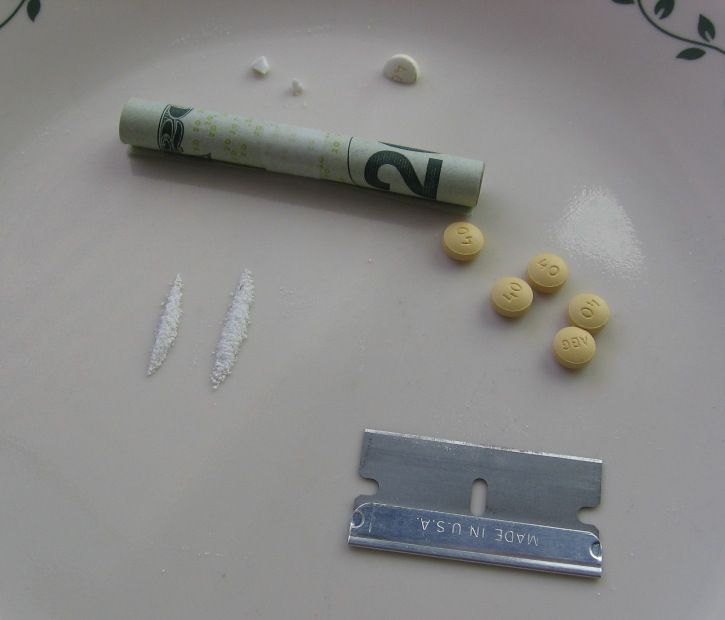
OxyContin launched in 1996. Its selling point was a controlled-release coating: because the dose was delivered over twelve hours, the argument ran, it produced less of the peak that drives abuse. Sales materials promoted an addiction rate of "less than one percent." The coating was defeated by crushing the tablet, a fact that circulated among users quickly.
In 2007 the Purdue Frederick Company and three senior executives pleaded guilty in federal court in Virginia to misbranding, the company to a felony, the executives to misdemeanors, with penalties totalling roughly $600 million. The agreed statement of facts acknowledged that supervisors and employees had represented OxyContin as less addictive and less subject to abuse than other opioids, contrary to what the company knew.
In 2020 Purdue Pharma pleaded guilty to three federal felonies including conspiracy to defraud the United States and violation of the federal Anti-Kickback Statute, in a resolution valued at roughly $8.3 billion. Members of the Sackler family separately agreed to a civil settlement without admission of liability. No family member has been criminally charged.
The bankruptcy plan that would have shielded the Sacklers from future civil suits in exchange for payment was struck down by the Supreme Court in Harrington v. Purdue Pharma L.P. (2024), which held that the Bankruptcy Code does not authorize releasing non-consenting claims against non-debtors. A renegotiated settlement followed. Over the same period the CDC recorded several hundred thousand U.S. opioid overdose deaths, across prescription opioids, heroin, and later illicitly manufactured fentanyl.
EVIDENCE FOR
- Two federal guilty pleas by the corporate entities, with agreed statements of fact conceding misrepresentation, the company's own admissions, not an outside allegation.
- Millions of pages of internal documents released through state attorney general litigation, showing sales targeting of high-prescribing physicians and internal awareness of abuse.
- The 2017 NEJM editor's note formally flagging the Porter–Jick letter's misuse, the scientific record correcting itself in public.
- Documented company funding of pain-advocacy organizations and continuing medical education that promoted broader opioid prescribing.
EVIDENCE AGAINST (THE OVERREACH)
- The epidemic is not reducible to one company. Deaths shifted heavily to heroin and then illicit fentanyl, which Purdue did not manufacture; blaming one firm for the full death toll does not survive the mortality data.
- Undertreated pain was a genuine clinical problem in the early 1990s, and the prescribing shift had support from physicians and regulators who had no financial interest.
- The FDA approved OxyContin and its original labeling, including language about the delayed-absorption formulation, a regulatory failure that is distinct from corporate fraud.
- No court has convicted an individual Sackler of a crime; claims of personal criminal liability remain untested allegations.
ASSESSMENT
CONFIRMED as to the misrepresentation, that is a matter of guilty plea, not interpretation. Filed in this archive because it fits a pattern the tobacco file (OSA-017) established: the most consequential conspiracies of the modern era are not run from bunkers. They are run through marketing departments, funded professional societies, and citations that nobody checks. The single most damaging document in this file is not a memo. It is a five-sentence letter to the editor that thousands of physicians cited as a study without ever reading it.
WHAT WOULD CHANGE THE GRADE
- CONFIRMED in court twice: Purdue pleaded guilty to federal charges in 2007 and again in 2020, and internal documents surfaced in litigation showed the marketing was knowingly misleading.
- The 1980 Porter and Jick letter, five sentences in the New England Journal of Medicine about hospitalised patients, was cited for decades as though it were a study demonstrating that opioids rarely cause addiction. The citation analysis of how that happened is itself published.
- Nothing evidential remains open. What remains contested is accountability rather than fact, and the bankruptcy structure is the reason.
FURTHER READING
- Massachusetts Details Sackler Family's Role In OxyContin Marketing : Shotsnpr.org, archived
- Purdue Pharma · Wikipedia
- The Porter and Jick letter · Wikipedia
- Empire of Pain: The Secret History of the Sackler Dynasty · Patrick Radden Keefe, 2021
RELATED FILES IN THIS ARCHIVE
- OSA-174 · BHOPALCONTESTEDForty tonnes of methyl isocyanate over a sleeping city
- OSA-017 · THE TOBACCO INDUSTRY COVER-UPCONFIRMED"Doubt is our product", the archetypal proven corporate conspiracy
- OSA-062 · THE RADIUM GIRLSCONFIRMEDTold the glowing paint was safe, taught to lick the brush
- OSA-106 · TETRAETHYL LEADCONFIRMEDSeventy years of leaded fuel, and the science bought to defend it