THE SHROUD OF TURIN
| FIRST RECORDED | Around 1354, in Lirey, France |
| RADIOCARBON | 1988: Oxford, Zurich and Arizona dated it to 1260 to 1390 with 95% confidence |
| DISPUTE | Whether the sampled corner was a later repair rather than original cloth |
| STATUS | Contested. Dating supports medieval origin; image mechanism unresolved |
THE CLAIM
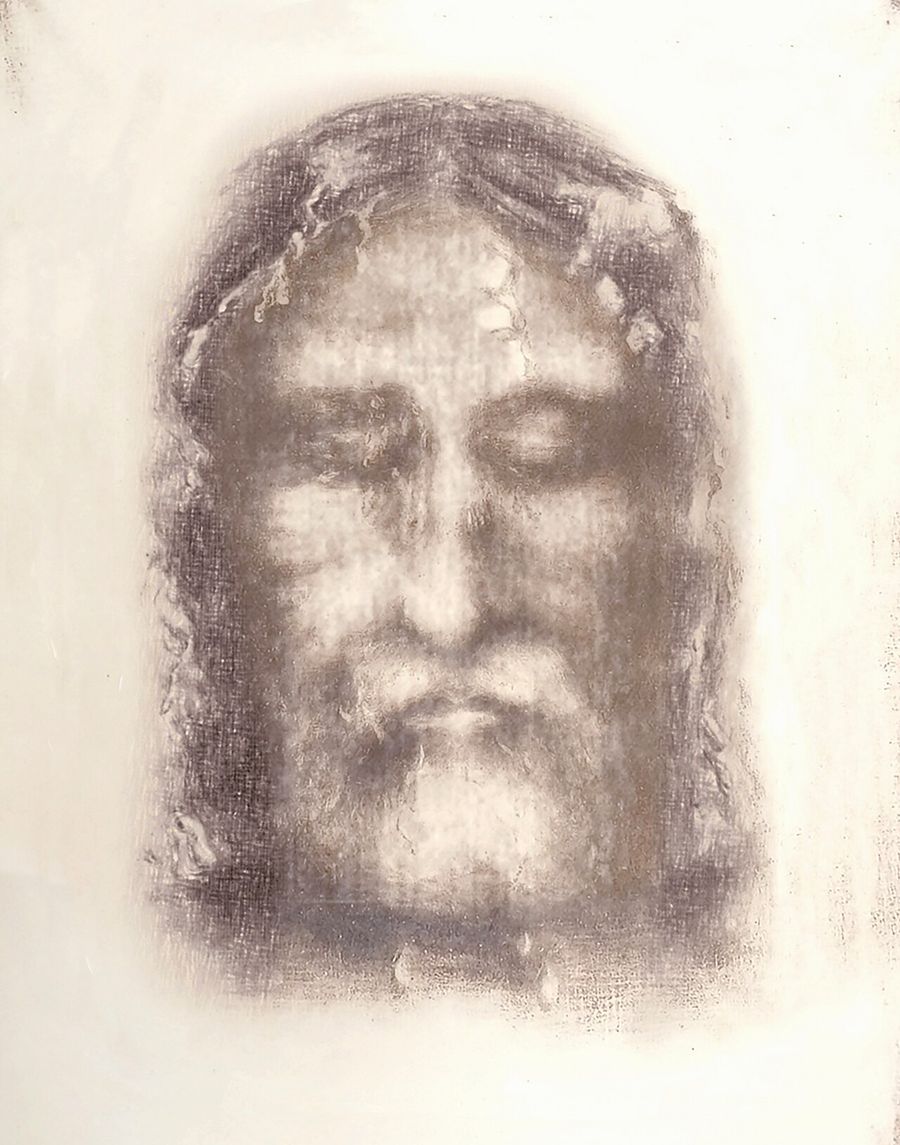
That the Shroud of Turin is the burial cloth of a crucified man from the first century, that the 1988 radiocarbon dating was invalidated by sampling from a repaired area, and that the image cannot be explained by any known medieval technique.
THE THEORY, AS ITS PROPONENTS TELL IT
Two separate questions run through this file and they do not have the same answer, which is why it is contested rather than settled either way.
The image is a faint, negative, superficial discolouration of the topmost fibres of the linen, with no pigment binder, no brush strokes and no capillary flow into the weave. It encodes distance information, which is why the 1898 photographic negative was so striking. No fully convincing reproduction of it by a medieval-plausible method has been demonstrated, though several partial approaches exist.
The 1988 radiocarbon test returned 1260 to 1390. Critics, notably Raymond Rogers, argued the sampled corner contained cotton and dye consistent with a sixteenth-century invisible reweave, and that its chemistry differed from the main cloth. The three laboratories and the original coordinators dispute this.
Proponents add the pollen and limestone evidence, the anatomical accuracy of the wounds including nail placement through the wrist rather than the palm, and the bloodstain chemistry, as pointing to a genuine crucifixion rather than an artistic representation.
WHAT IS KNOWN
The radiocarbon result is real, was produced by three independent laboratories with consistent results, and remains the single strongest piece of dating evidence.
The reweave argument is genuinely contested among specialists. A 2019 re-analysis of the raw 1988 data raised questions about the statistical homogeneity of the sub-samples; other statisticians disagree.
The first documented appearance is in the 1350s, and a local bishop reported at the time that an artist had confessed to making it, though that report survives only in a later memorandum and the confession itself does not.
No medieval technique has been shown to produce all the image's features together, which proponents treat as decisive and sceptics treat as an unsolved problem rather than evidence of the supernatural.
EVIDENCE FOR
- An image with properties no demonstrated medieval method reproduces in full.
- Anatomical accuracy inconsistent with medieval artistic convention, particularly wrist nailing.
- The reweave hypothesis, supported by reported chemical differences in the sampled corner.
- Pollen and mineral traces argued to be consistent with the Jerusalem area.
EVIDENCE AGAINST
- Three independent laboratories returned consistent medieval dates, which is a strong result.
- The documented history begins in the 1350s, and a contemporaneous bishop reported a confession of forgery.
- The pollen evidence originates largely with one researcher whose methods have been criticised and not independently replicated.
- An unexplained image is an open problem in materials science, not evidence for any particular explanation, and this archive applies that rule everywhere else.
ASSESSMENT
Contested, and this office is comfortable leaving it there. The dating evidence is the strongest single element and it points medieval; the sampling objection is not frivolous and has not been resolved to everyone's satisfaction; and the image mechanism is genuinely unexplained, which is a fact about our knowledge rather than about the object's origin. The one move this archive will not make is treating an unsolved problem as a positive finding, which is the same discipline applied to OSA-048 and OSA-007.
WHAT WOULD CHANGE THE GRADE
- The strongest single element is the dating, and it points medieval: three independent laboratories returned consistent results of 1260 to 1390.
- The sampling objection is not frivolous and is unresolved. Critics argue the sampled corner was a later invisible reweave with different chemistry, and a 2019 re-analysis of the raw data raised questions about sub-sample homogeneity that other statisticians dispute.
- Genuinely unexplained: the image mechanism. No demonstrated medieval technique reproduces all its features together. That is a fact about the limits of our knowledge, not a positive finding, and this archive applies that rule everywhere else.
FURTHER READING
- (PDF) The Shroud of Turin between history and science: an ongoing debateacademia.edu
- Turin Shroud: full text of Pope Francis' commentstelegraph.co.uk, archived
- Shroud of Turin · Wikipedia
- Damon et al., Radiocarbon dating of the Shroud of Turin, Nature (1989)
- Raymond Rogers, Studies on the radiocarbon sample from the Shroud of Turin, Thermochimica Acta (2005)
RELATED FILES IN THIS ARCHIVE
- OSA-109 · PILTDOWN MANDEBUNKEDA human skull, an orangutan jaw, and forty years of citations
- OSA-187 · THE ANTIKYTHERA MECHANISMCONFIRMEDAn ancient Greek device whose complexity was not matched until the medieval period
- OSA-034 · MAJESTIC 12DEBUNKEDThe secret UFO committee that existed only on film
- OSA-117 · THE DREYFUS AFFAIRCONFIRMEDThe state framed an innocent man and then forged evidence to keep him convicted